Our People
Inga People
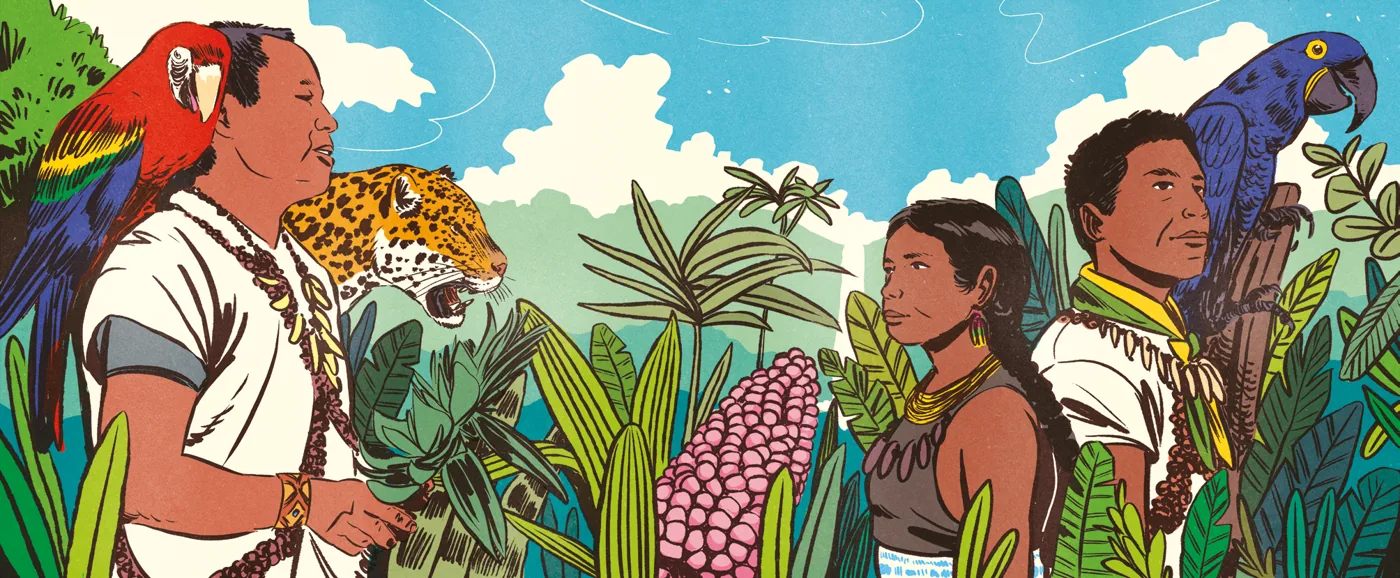
We are Amazonian Indigenous people, Colombians, from the Middle Putumayo: the Inga People, native to this territory. Our word is guided by the Law of Origin: the territory is mother, what affects one part affects all, and thought is cared for in the chagra, in the minga, in the remedy and in the language.
This page traces our history from the past to the present and from the broadest to the closest: from Abya Yala to Tawantinsuyu, from our origins to the Royal Audiencia of Quito, from the Colombia of 1886 to that of 1991, and from today's Putumayo to our reservations in Villagarzón.
Abya Yala
Before countries existed, this continent was Abya Yala, land of many Peoples. The Inga (runa simi) is a language of the Quechua family, of the Ecuadorian group, which there today is called Kichwa; it is also spoken by the Kichwa People, likewise recognized in Colombia, by the Otavalo in Ecuador and by other Peoples. That affiliation shows where the language comes from, not when the People arrived: the Inga People is native to this territory, and its history does not begin at the national, departmental or municipal boundaries that were drawn later.
Tawantinsuyu and Chinchaysuyu
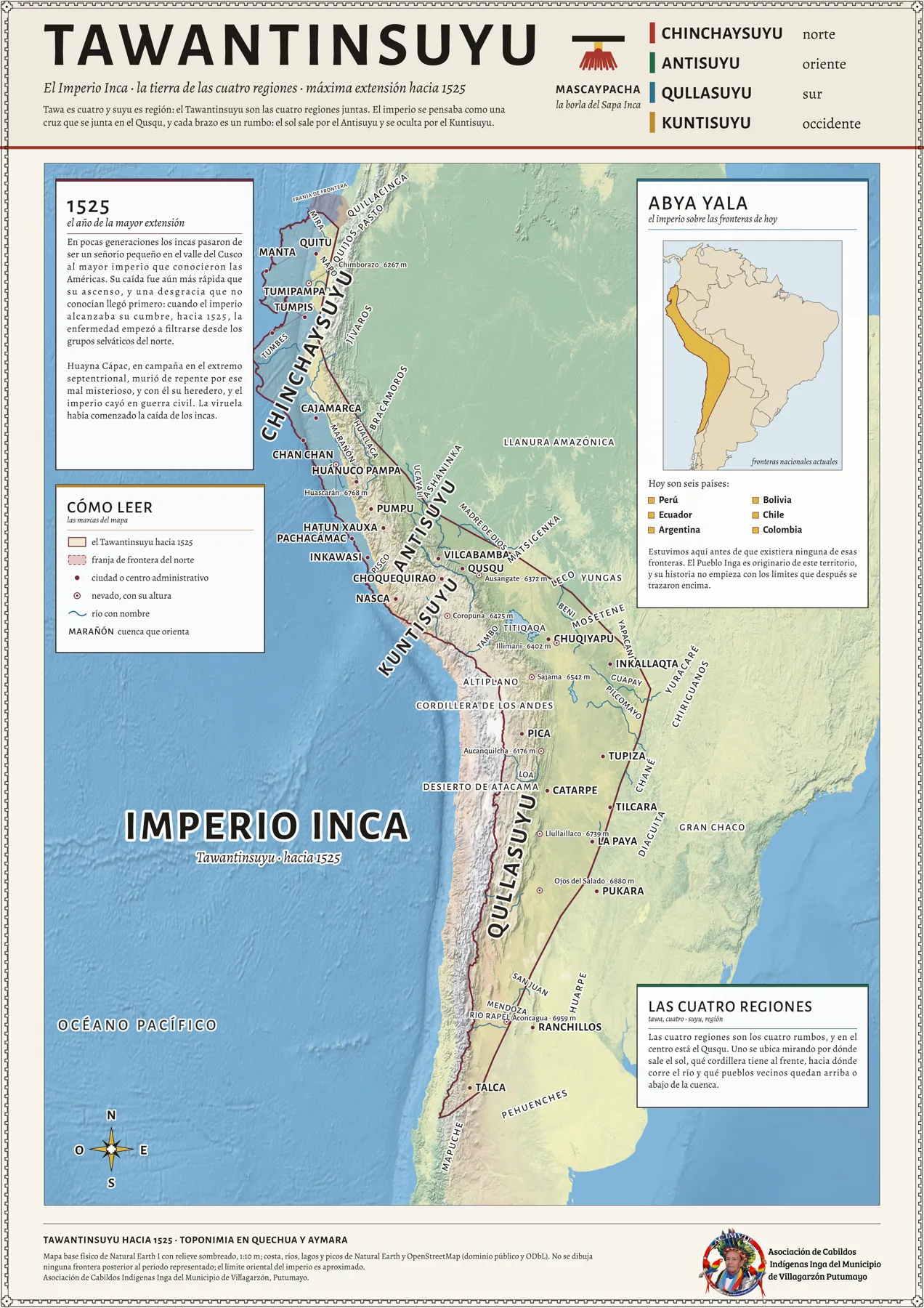
Tawa means four and suyu means region: Tawantinsuyu was the four regions together, with Qusqu at the center. Around 1525 it extended from the south of present-day Colombia to central Chile. Its northern region was Chinchaysuyu, and its frontier was not a line but a disputed strip between the Angasmayu River and the Amazonian foothills, where the mountains descend to the rainforest.
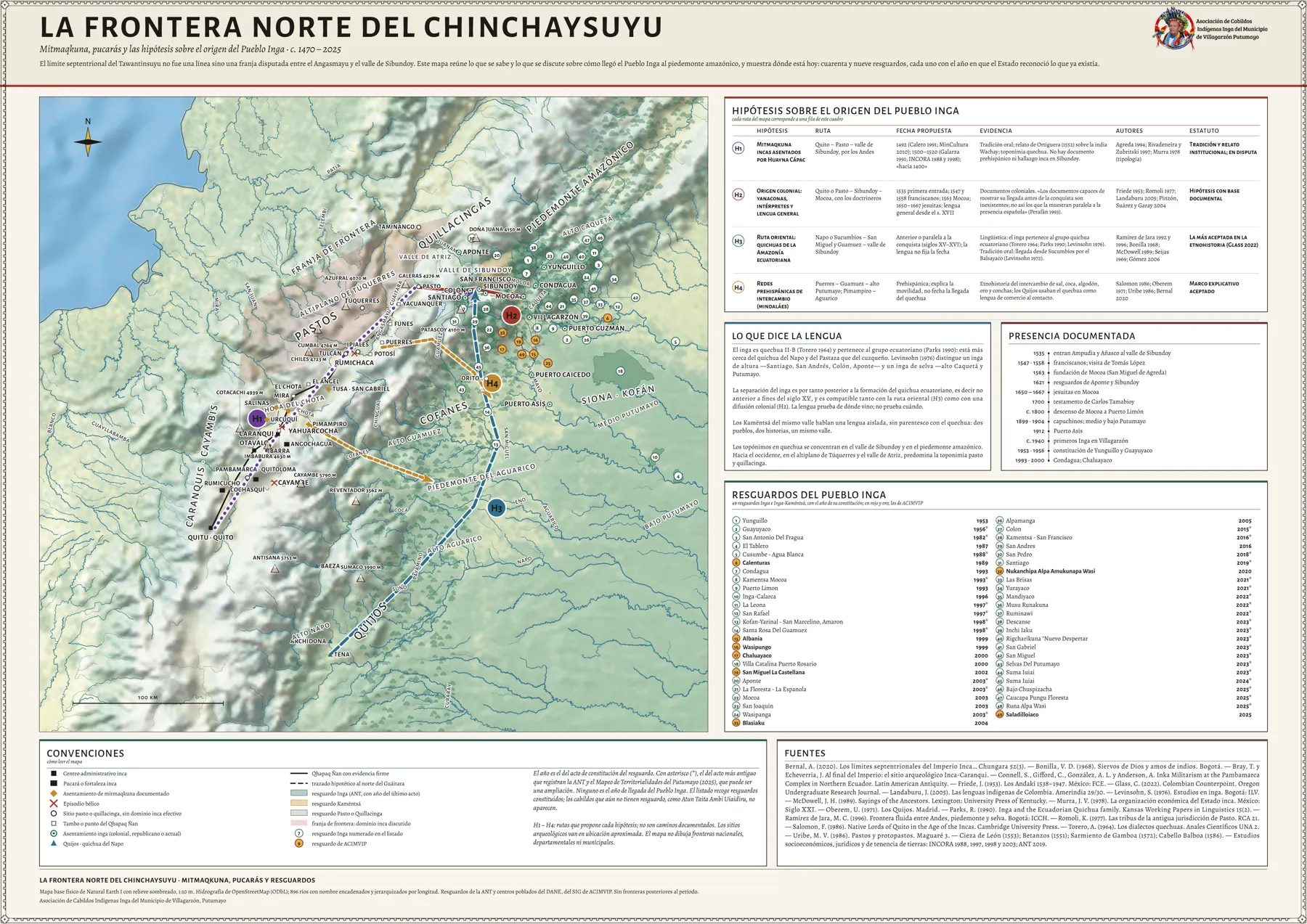
Our four origins
Our memories recall four origins, and all four are part of who we are:
- The path from the Amazon. Quichua peoples came up from the east —along the Napo, Aguarico, San Miguel and Guamuez rivers— to the foothills, through the territory of the Quijos and the Kofanes, as far as Mocoa and other places in the Putumayo.
- The mitmaqkuna of the Tawantinsuyu. The elders tell that we were colonies that the Inca Huayna Cápac brought to guard the northern frontier, toward the end of the fifteenth century, as recorded in the Safeguard Plan.
- The colonial period. The Quechua general language spread through interpreters, yanaconas and missionaries from the mid-sixteenth century onward.
- Exchange networks. The merchants (mindaláes) connected the highlands with the rainforest since before the conquest, and our families moved along those paths.
When the Spaniards arrived in the Putumayo, in 1535, there were already organized peoples in Mocoa and in the foothills. Since then the Inga People has lived between the mountain and the rainforest.
Before Colombia: the Royal Audiencia of Quito
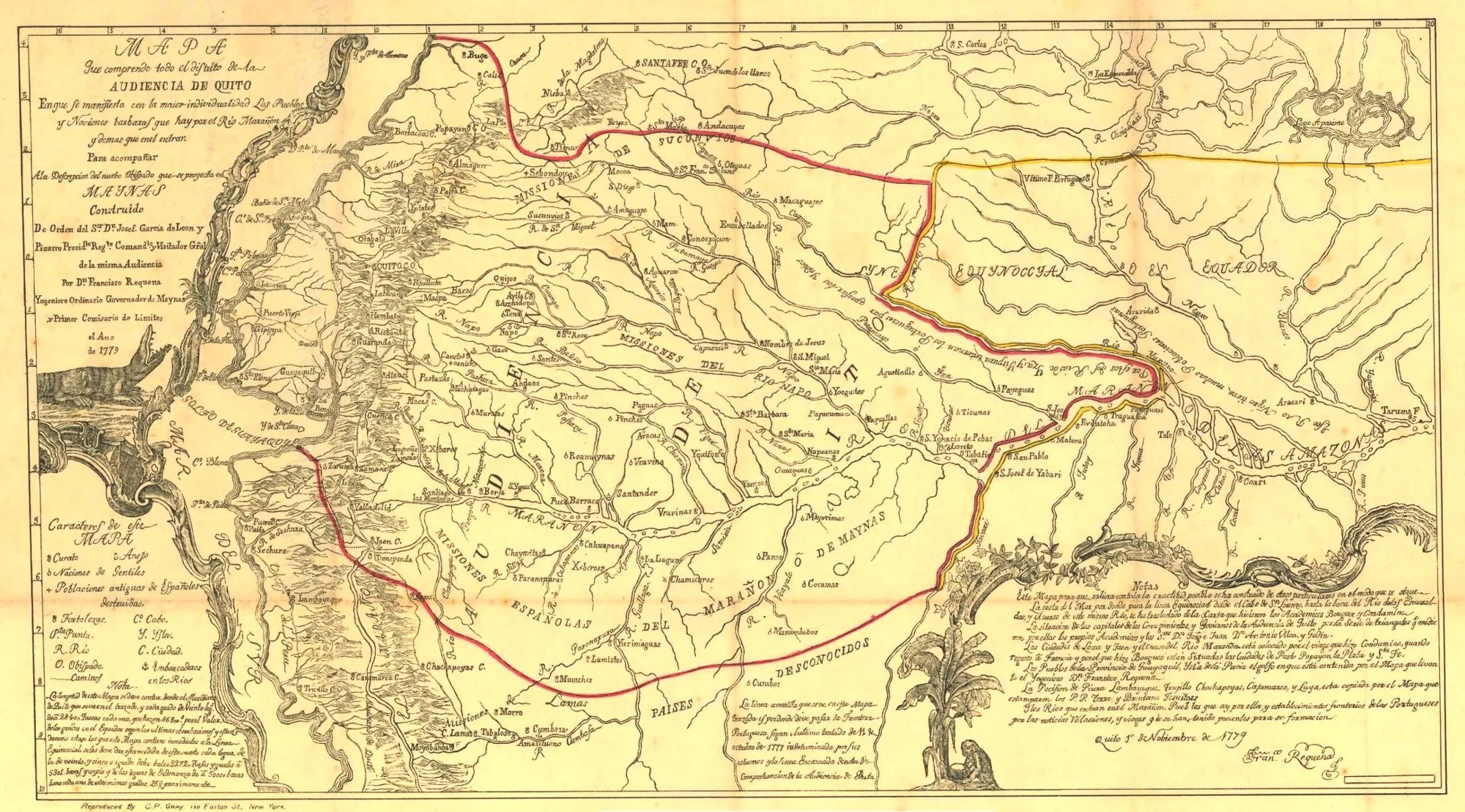
Before Colombia and Ecuador existed, this territory was part of the Royal Audiencia of Quito. Its borders were drawn by the non-Indigenous, the iura in our mother tongue, without asking the Peoples who inhabited it.
Colombia in 1886 and the Intendancy of Putumayo
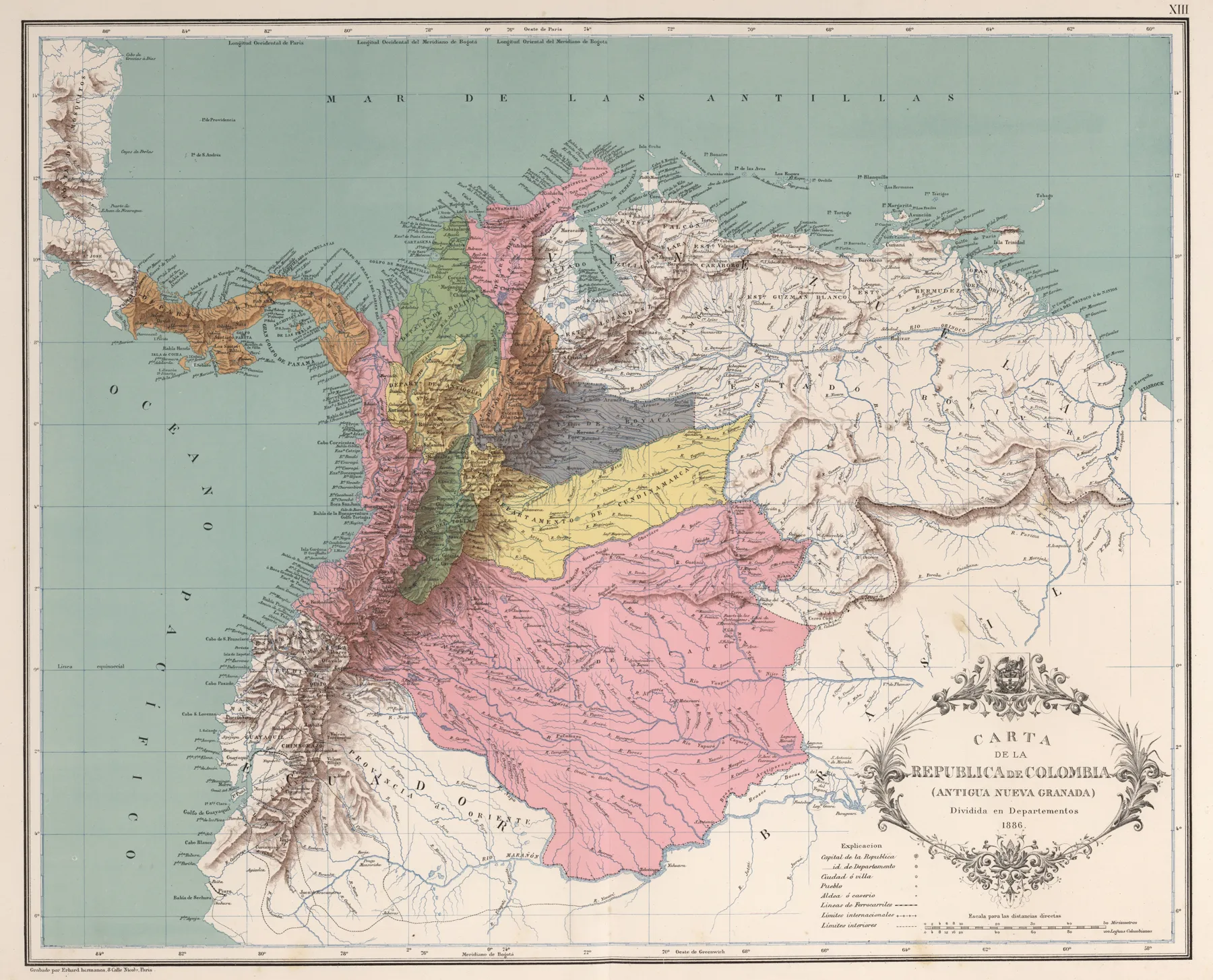
With the Constitution of 1886, Colombia was organized into departments. The Putumayo did not yet exist as a unit of its own: our territory was part of Cauca, on a southern frontier that the State barely knew. In 1905 an Intendancy of Putumayo was separated from Cauca; from 1912 it was a Commissariat, and Law 72 of 1968 made it the National Intendancy of Putumayo, with its capital in Mocoa. All of this took place on a territory in which we already lived.
Colombia in 1991 and the department of Putumayo
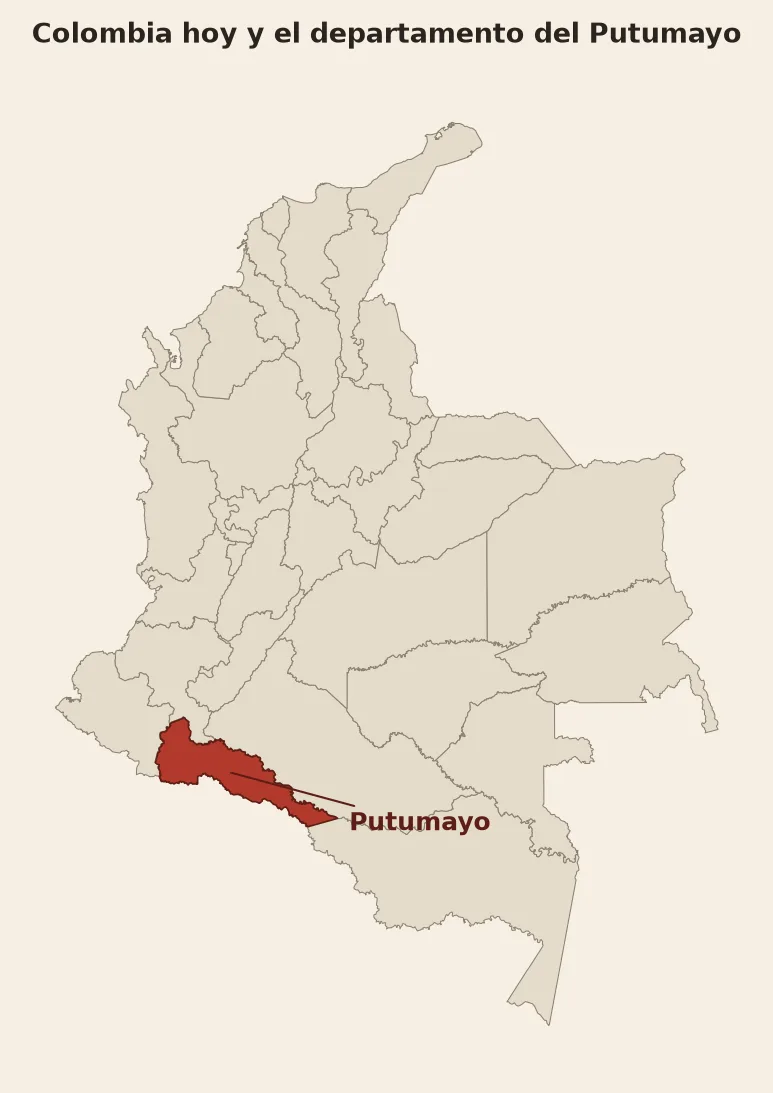
The Constitution of 1991 made the Putumayo a department and recognized that Colombia is a multiethnic and multicultural country. It also recognized our reservations, our authorities and our own law. We are Amazonian Indigenous people and Colombians: the Inga People has lived here since before these boundaries existed.
The Middle Putumayo today
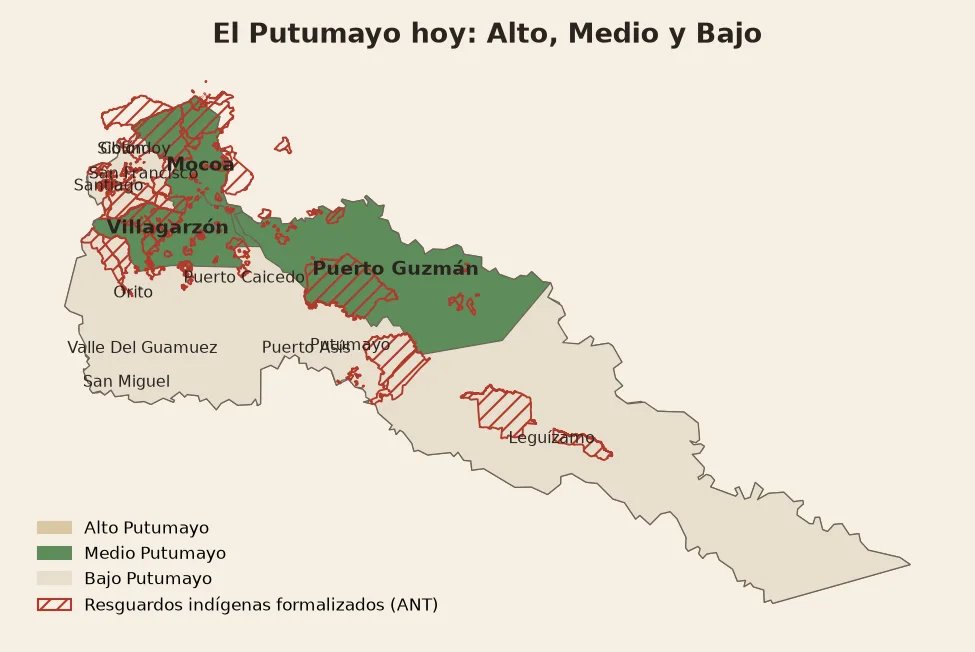
Putumayo is traveled in three parts: the Upper Putumayo, in the Sibundoy Valley (Santiago, Colón, San Francisco and Sibundoy); the Middle Putumayo (Mocoa, Villagarzón and Puerto Guzmán), in the foothills where the mountain range descends to the Amazonian plain; and the Lower Putumayo, between Puerto Asís, Orito and the Guamuez Valley. The Putumayo is the territory of many Peoples, and the Inga People shares it with them.
Here Inga life is ordered between the mountain, home of the spirits who care for the rivers and the animals, and the valley, where the chagra is planted, where people fish and gather the seeds of the forest. The remedy of ambi waska, guided by the iachas and the taitas, guides health and decisions. The Atun Puncha brings families together every year. The chaskis y wasikamas, our own guard, patrol and care for the territory.
Our reservations in Villagarzón
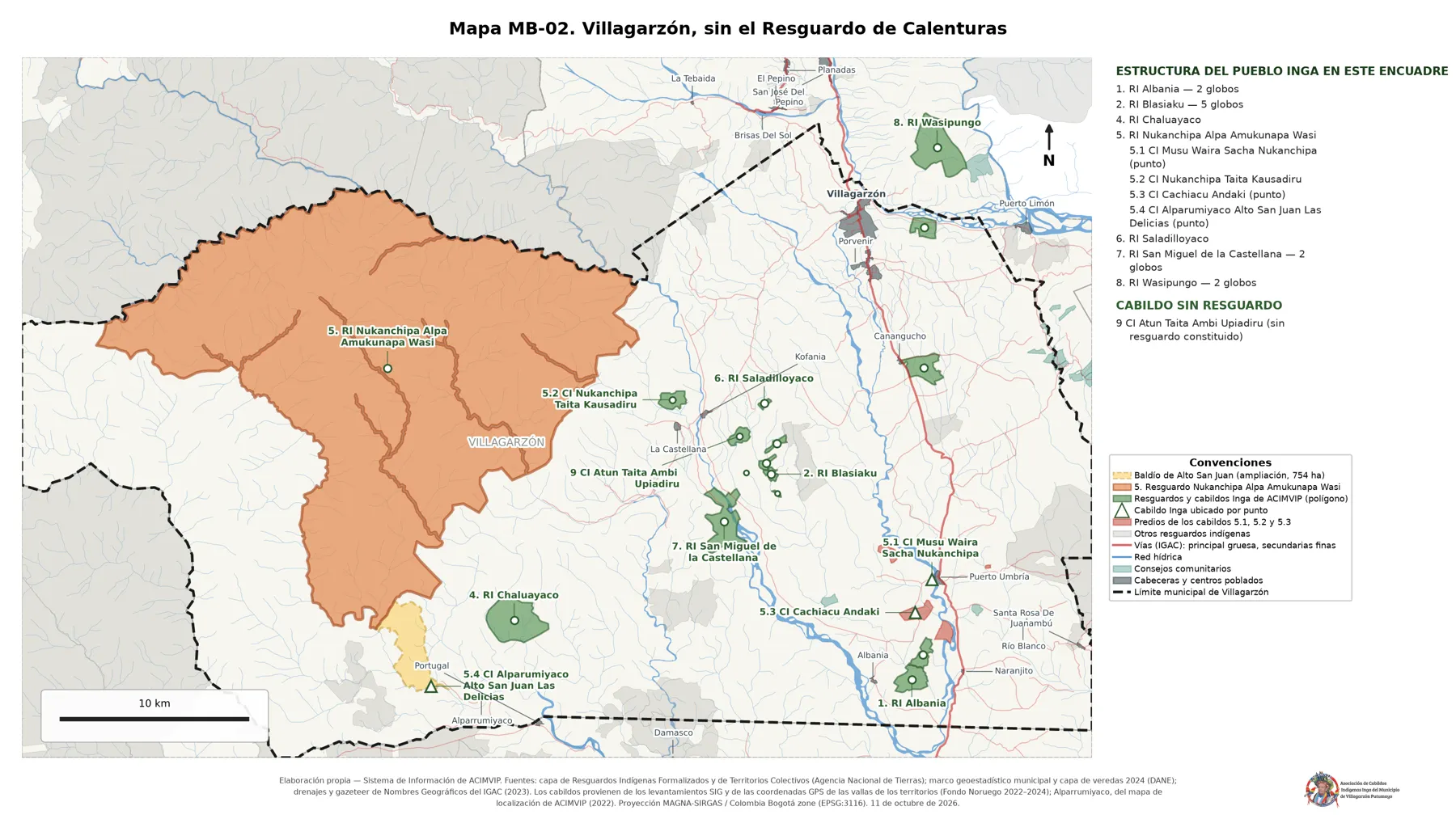
In Villagarzón are our reservations and cabildos, with their authorities, their assemblies and their mingas of thought, brought together in ACIMVIP. Get to know our communities.
ILO Convention 169: we are indeed Amazonian Indigenous people
Convention 169 of the International Labour Organization, which Colombia approved through Law 21 of 1991, recognizes as Indigenous Peoples those descended from the populations that inhabited the country or a region of it before the conquest, colonization or the establishment of present state boundaries, and who retain their own social, economic, cultural and political institutions. And it states that self-identification is the fundamental criterion. That is why we are, without a doubt, an Amazonian Indigenous People: we were here before the borders, we retain our own government and we recognize ourselves as Inga.
Colombians of the Middle Putumayo
We proudly acknowledge our roots in Tawantinsuyu and in the language we share with other Peoples. But it offends us to be called Ecuadorians or Peruvians: it is a way of saying that we are not from here, of denying our right to the territory and of disregarding our history. We are Colombians, we are Amazonian and we are from the Middle Putumayo. The Inga People is native to this territory.
The Safeguard Plan of the Inga People
In 2009, the Constitutional Court, in Order 004, warned that the Inga People is at risk of physical and cultural extermination due to the armed conflict and displacement, and ordered the construction of safeguard plans. The Safeguard Plan of the Inga People of Colombia (Ministry of the Interior, 2013), Nukanchipa kausaikunata iuiaikunata mana uañungapa sakisunchi —so that our life and our thought are not lost—, was built by the Inga communities of the country.
 Safeguard Plan of the Inga People of ColombiaMinistry of the Interior, 2013. PDF→
Safeguard Plan of the Inga People of VillagarzónAction plan booklet, 2023. PDF→
Let us walk together
We are seeking allies to care for the territory and water, strengthen the language and own education, accompany women and youth, sustain our own medicine and livelihoods, and defend human rights and peace in the Amazon. If your organisation would like to work with the Inga People of the Middle Putumayo, write to us.
Sources
Safeguard Plan of the Inga People of Colombia, «Nukanchipa kausaikunata iuiaikunata mana uañungapa sakisunchi», Ministry of the Interior and Inga People of Colombia, 2013 (with figures from the DANE 2005 Census). Constitutional Court, Order 004 of 2009. Law 72 of 1968 (National Intendancy of Putumayo); Political Constitution of 1991; ILO Convention 169 (Law 21 of 1991). On the origins: M. C. Ramírez de Jara (1992, 1996); A. Torero (1964); S. Levinsohn (1976); F. Salomon (1986); J. Friede (1953); Glass (2022); Bernal (2020). The origins are presented as memory recalls them and as research studies them, which remains open. The plates are by ACIMVIP and each one carries its own sources.