ACIMVIPACIMVIP Donate now

Idioma · Language

EspañolEsta página en español EnglishThis page in English
IngaNukanchipa rimai, our mother tongue. The website in Inga, coming soon. Meanwhile, Learn Inga with words taken from the sources, with their page.
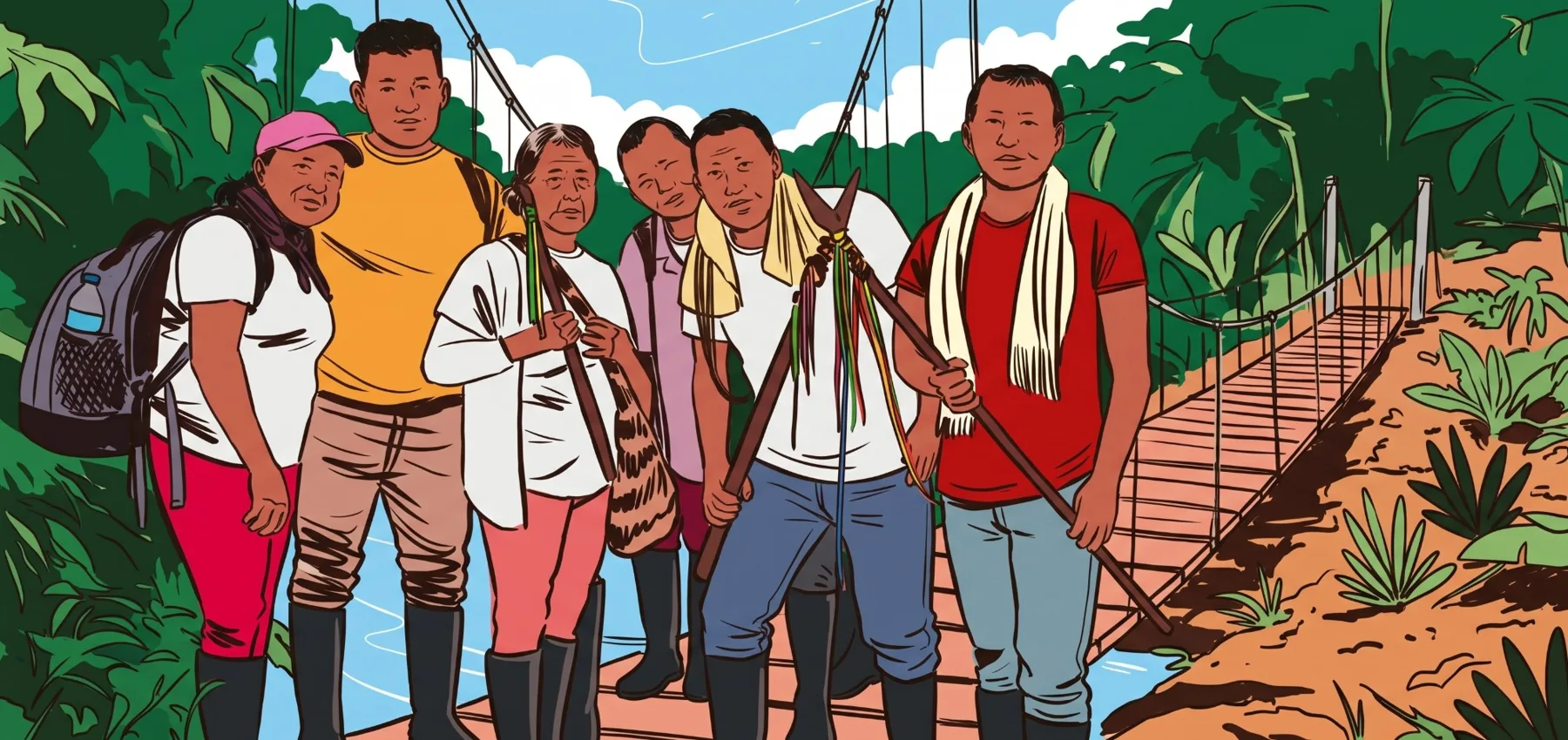
Illustration of Inga community members on a hanging bridge in the forest
Ancestral Territory of the Inga People

Ancestral Territory Nukanchipa Alpa Amukunapa Wasi Vida Maskarigridiru

The mountain, house of the masters, and the valley where subsistence is sought.

A territory that has sustained us since the origin

For the Inga People, the territory is life: there we find the means to feed ourselves, heal ourselves and strengthen ourselves spiritually. We are part of the territory, but we are not its owners; our role is to guard it and preserve its harmony.

The Indigenous presence in these mountains is ancient. On the banks of the Vides River there are petroglyphs, and stone artefacts and funerary urns have been found in the region, now kept in the community museums of Chaluayaco and Cachiacu Andaki. Studies speak of ancient migrations of forest Peoples towards the foothills, and our rivers and streams keep their names in Inga: Alwaceriaku, Chaluaiaku, Uchpaiaku, Blasiaku, Tarukaiaku.

A wise elder recounted, after a remedy ceremony, that before the Franciscans arrived in Mocoa our ancestors already lived between the San Juan River and Barnis Loma. Then came the missions, quinine and rubber, and from 1940 onwards peasant colonisation, which gradually took our land away.

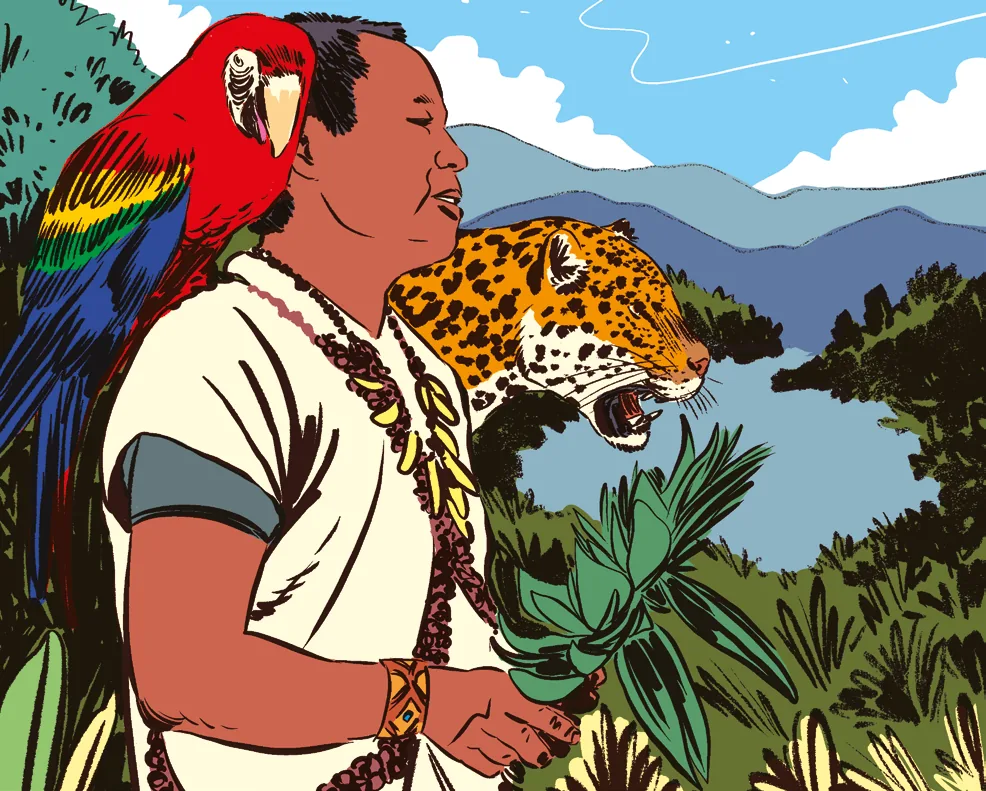
Illustration of a taita with a macaw on his shoulder and a jaguar by his side

The mountain and the valley

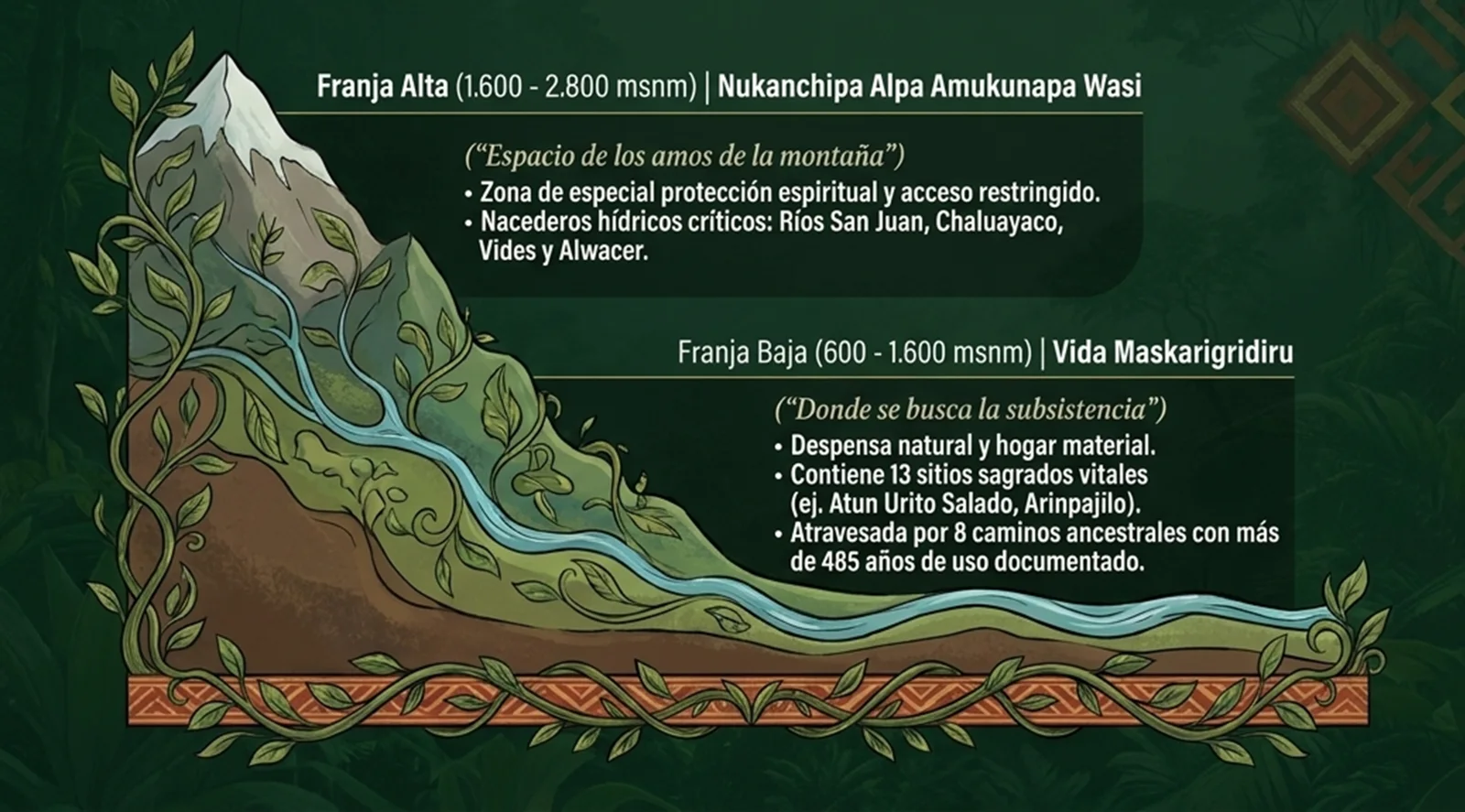
The name describes two belts and an Inga way of occupying and living in the territory.

Illustration of the two belts: the upper belt of the mountain, Nukanchipa Alpa Amukunapa Wasi, and the lower belt of the valley, Vida Maskarigridiru
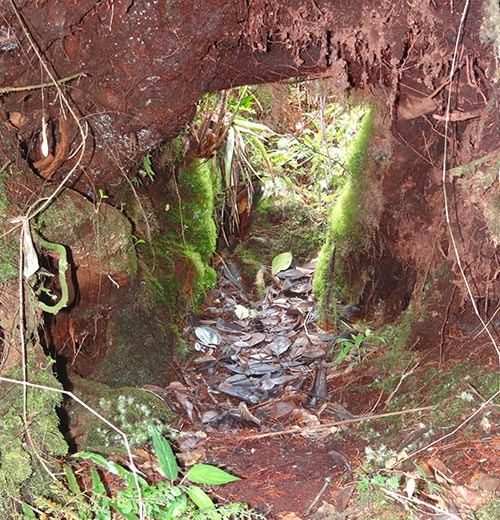
Path through the humid mountain forest
Upper belt · the mountain · 1.600 to 2.800 m a.s.l.

Nukanchipa Alpa Amukunapa Wasi

The house of the masters of our territory, our mountains. The masters, the amukunapas, are the spirits, and there rise the rivers that flow down to the valley: the forest protects the sources of the San Juan, the Chaluayaco, the Vides and the Alwacer. This belt contains the Inga Indigenous Reserve of Nukanchipa Alpa Amukunapa Wasi, with 30.803 hectares, and the sacred sites. Access is difficult because of the slopes and restricted by the presence of the masters of the mountain.
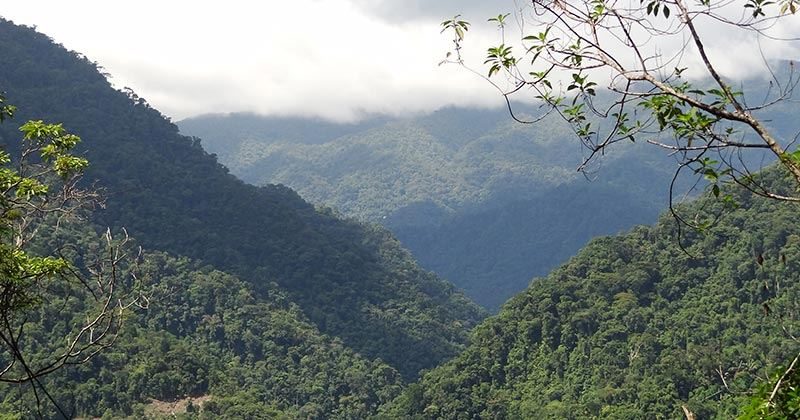
Valley with forest and mountains in the background
Lower belt · the valley · 600 to 1.600 m a.s.l.

Vida Maskarigridiru

Where we seek our food and our livelihood: chagras with fallow rotation, subsistence fishing, occasional hunting according to the cultural code, gathering of fruits and of fibres for basketry and bags, and mingas. Here lie the settlements of the twelve communities of the Association, including the four Cabildos (Indigenous traditional authority) that share the Reserve (Cabildo Alparumiyaco Alto San Juan Las Delicias, belonging to the Inga Indigenous Reserve of Nukanchipa Alpa Amukunapa Wasi; Cabildo Cachiacu Andaki, belonging to the Inga Indigenous Reserve of Nukanchipa Alpa Amukunapa Wasi; Cabildo Nukanchipa Taita Kausadiru, belonging to the Inga Indigenous Reserve of Nukanchipa Alpa Amukunapa Wasi; Cabildo Musu Waira Sacha Nucanchipa, belonging to the Inga Indigenous Reserve of Nukanchipa Alpa Amukunapa Wasi), as well as the ancestral paths and the areas for expansion and environmental connectivity.

Sacred sites and paths

The sacred sites were given by the iachas, the sinchis and the members of the Inga People in their language. They are places where the masters of the animals and the spirits of the territory dwell. People went to Atun Uritu Salado, the salt lick of the parrots, for the festival of forgiveness, the Kalusturinda, in search of plumage, fish and game, since before colonial times.

Eight ancestral paths, used for more than 485 years, still connect the territory.

Thirteen sacred sites

  • Atun Uritu Salado
  • Arinpanjilo
  • Coneju Panga
  • Samarigridiru
  • Barnis Loma
  • Salado de la Mariposa
  • Cotudo Salado
  • Sacha Wagra Salado
  • Taruka Salado
  • Rupaskaiaku
  • Salado Tustulita
  • Oso Panga
  • El Remolino

Spellings from the Reseña del Territorio Ancestral (2022), p. 5.

How we represent it

The Ancestral Territory is a collective subject of rights. On the map we read it in three rings, which explain its meaning and do not fix boundaries.

Core

What is titled

The titled reserves, the Cabildos with territory and the plots with accredited tenure.

Range

What is lived

The space that is travelled and used around the core. It is a working reading on the map, not a boundary.

Affinity

Our Inga brothers and sisters

Twelve Inga territories of Putumayo that are not part of the Association and have their own government.

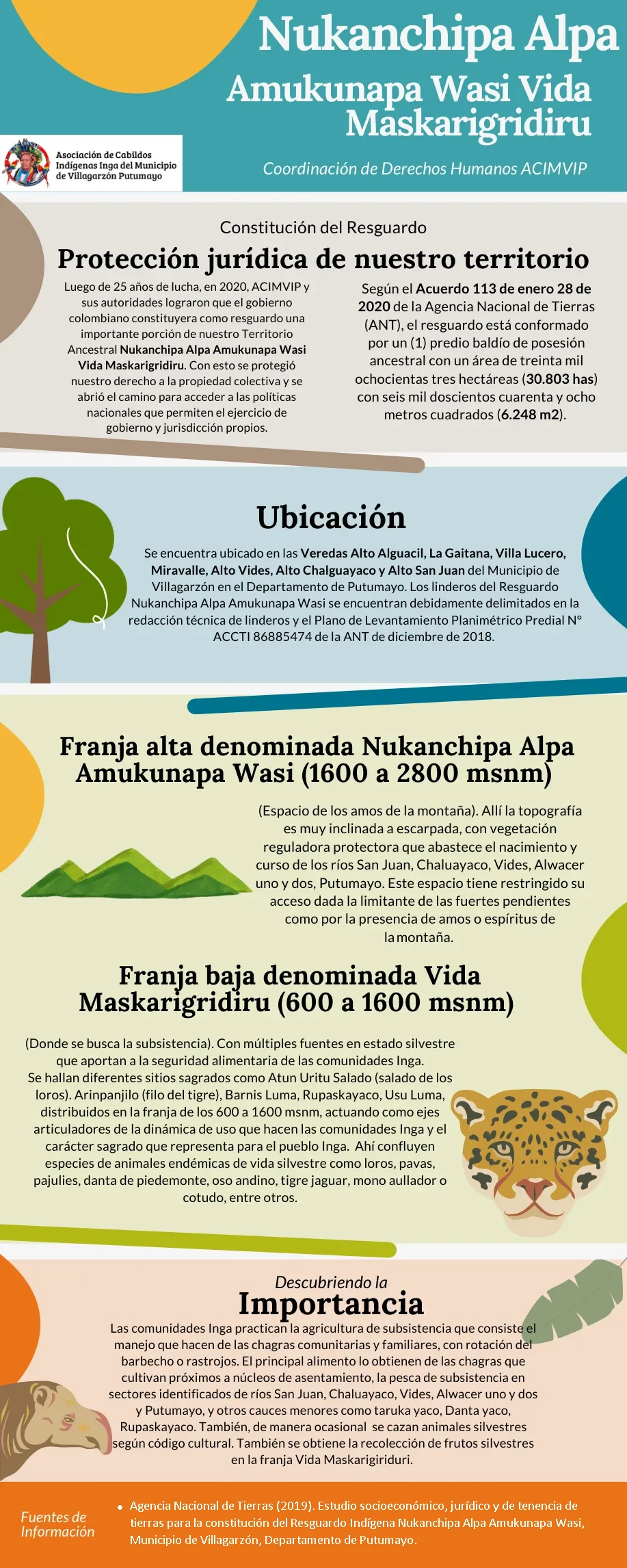
Infographic of the Ancestral Territory: the belts, the rivers and the use of the territory
Infographic of the Ancestral Territory Nukanchipa Alpa Amukunapa (2022). Download the infographic (PDF)

Our struggles → How we govern ourselves →

The Ancestral Territory, a subject of rights recognised by the JEP

On 14 January 2026 the Special Jurisdiction for Peace, in Case 09, resolved to «ACCREDIT as a victim, in its capacity as a collective subject of rights, the Inga Indigenous People and the Nukanchipa Alpa Amukunapa Wasi Vida Maskarigridiru - Ancestral Territory of the Inga Indigenous People» (Auto SRVJJCP-001 of 2026). The Constitutional Court had already included the Inga People among the Indigenous Peoples at risk of physical and cultural extermination.

The Inga People, a victim

The Inga Indigenous People was accredited as a victim of the armed conflict, in its capacity as a collective subject of rights (first operative paragraph).

The Territory, a collective subject of rights

The Ancestral Territory is a collective subject of rights. The Auto records that, for Indigenous Peoples, the territory is a living and sacred being, Alpa mamá for the Inga People (recitals 58 and 74).

The Territory, a victim

Nukanchipa Alpa Amukunapa Wasi Vida Maskarigridiru was accredited as a victim, on the basis of Decree-Law 4633 of 2011, which recognises that for Indigenous Peoples the territory is a victim (recital 74).

Case 09 investigates the crimes committed against ethnic Peoples and territories in the armed conflict. ACIMVIP submitted to the Jurisdiction the report of the Inga People of Villagarzón in September 2022, requested in October 2023 that the People and its Ancestral Territory be recognised as collective victims, and in November 2025 the Tribunal for Peace granted the Association's tutela (constitutional action). That the territory is a victim protects the relationship of the Inga People with the mountain and the valley. The proceedings in the case continue, with the participation of the Inga People.

Read Auto SRVJJCP-001 of 2026 (PDF)Case 09 at the JEP →Infographic of Case 09 (JEP, PDF) →

Within the territory

Inga Indigenous Reserve of Nukanchipa Alpa Amukunapa Wasi

Discover the Reserve