News · 15 July 2015
Administrative Court of Nariño protects the prior consultation rights of the Inga People of Villagarzón and Puerto Caicedo
By: Laylor Vanessa García.
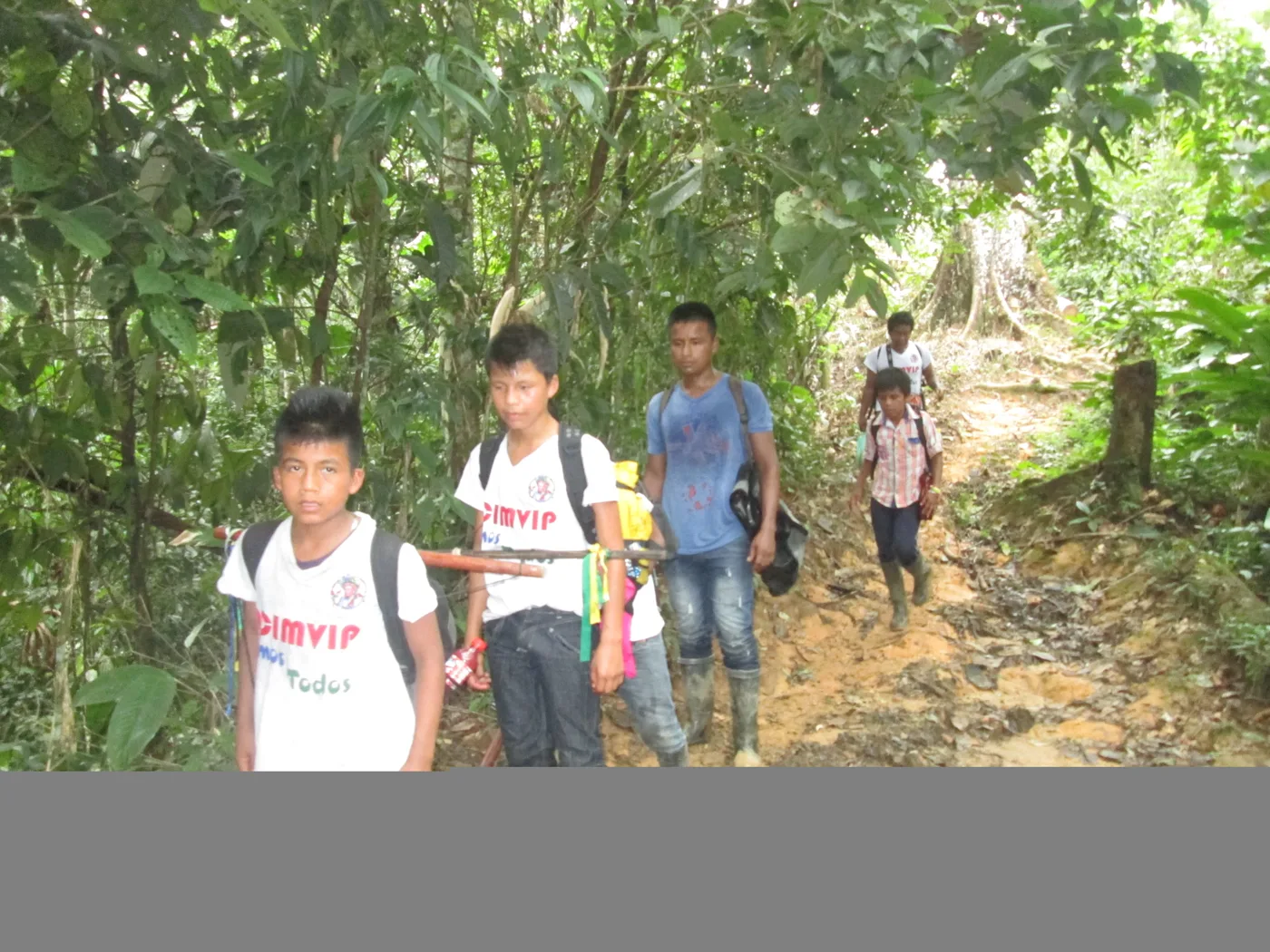
As can be seen, this tutela ruling encapsulates a reality of Putumayo. On the one hand there are the Indigenous Peoples who are at risk of disappearing, resisting and confronted for exercising their rights, with a government headed by the DCP complicit with foreign multinationals such as Gran Tierra Energy Colombia.
On July 15, 2015, the Superior Court of Pasto [ACIMVIP clarification: the judicial body is the Administrative Court of Nariño, Decision Chamber of the Oral System, and the first-instance ruling bears file number 52001-23-33-003-2015-00559-00], with First Instance ruling No. 2015-00559, granted protection of the fundamental rights to Prior Consultation, due process and autonomy of the Inga community of the Municipalities of Villagarzón and Puerto Caicedo in favor of the Asociación de Cabildos Indígenas Ingas de Villagarzón y Puerto Caicedo del Departamento del Putumayo- ACIMVIP. The constitutional principles underpinning this decision are Pluriculturalism, Participation and the others of the constitutional block that constitute the essential core of the Right to Free and Informed Prior Consultation.
The court suspended the legal effects of Resolution 0573 of April 3, 2012 issued by the Directorate of Prior Consultation of the Ministry of the Interior –DCP, which denies the presence of the Inga People in the impact area of the oil exploitation project -APE la Cabaña- of the international company Gran Tierra Energy Colombia. This ruling once again confirms the validity of the Colombian social State under the rule of law.
To understand the context of this court decision, it is necessary to highlight the process of political and administrative empowerment and strengthening of ACIMVIP, which is organized to bring the Inga People together and prevent Indigenous culture from disappearing. Along the path traveled by this Association of traditional authorities, it has found that the State, through the DCP, favors the interests of the multinationals that exploit the territory and violates the fundamental rights enshrined in the Political Constitution of Colombia.
The challenge after this ruling lies in how it is interpreted and assumed by the DCP and the multinational Gran Tierra Energy Colombia, an international oil and gas exploration and production company headquartered in Calgary, Canada. These last two are bent on denying and violating the rights of the Inga People.
This court ruling is the result of the work of –ACIMVIP, but also the beginning of a new process of cultural resistance, since the strategies and dynamics that the DCP has been implementing, in its role as coordinator and guarantor of this Right, are the disintegration and fracturing of Indigenous organizations, cultural assimilation and the denial of the political scope of the autonomy of Indigenous Peoples. This can be read by analyzing the modus operandi of the Prior Consultation Directorate, which acts in complicity with extractive companies.
To support the above, it is enough to analyze the agreements between companies and Indigenous Peoples in the consultation spaces coordinated by the DCP. These agreements consist of livestock projects, the construction of schools or infrastructure such as bridges or road improvements, thus taking advantage of the community's needs and the absence of State investment. In addition, the DCP refuses to consult the processes through the authorities of the Inga People, seeking to fragment cultural identity and organizational processes such as the one ACIMVIP leads.
To complete the context of the tutela action, the geographical conditions of the Amazonian foothills must also be highlighted, where water sources, the diversity of flora and fauna and their endemism are considered hotspot zones, or biodiversity hot areas. This is an international designation that protects places with environmental characteristics such as those of the Amazonian Foothills.
As can be seen, this tutela ruling encapsulates a reality of Putumayo. On the one hand there are the Indigenous Peoples who are at risk of disappearing, resisting and confronted for exercising their rights, with a government headed by the DCP complicit with foreign multinationals such as Gran Tierra Energy Colombia, which through oil exploitation is leaving irreparable environmental and cultural costs to the Colombian nation. For a Colombia without Indigenous culture and the Amazon ecosystem is a poor Colombia.
Originally published by Actualidad Étnica on July 27, 2015