News · 4 February 2020
The Inga Indigenous People halt the oil company Gran Tierra Energy in Putumayo
The Council of State ruled in their favor and halted the Canadian company's exploration, but now the Duque government is reportedly seeking to revive the mega-project
By Las Dos Orillas
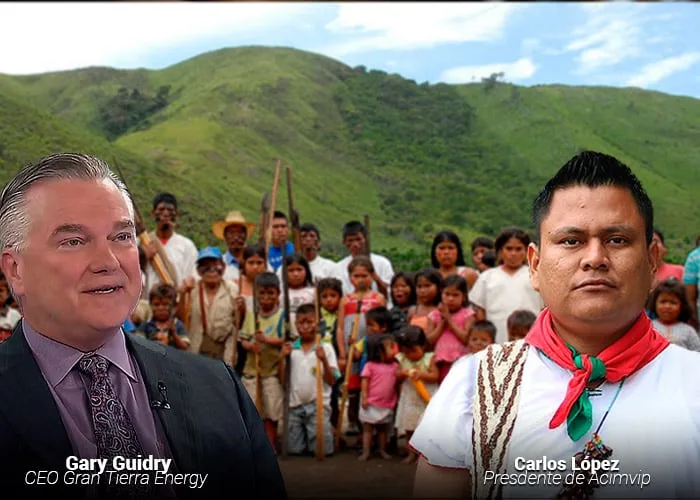
Everything was ready for the Canadian oil company Gran Tierra Energy to begin exploration work on a 46,000-hectare block [ACIMVIP clarification: the area of the APE La Cabaña project is 629 hectares, according to Resolution 0573 of 2012 and the 2015 tutela ruling] in Villagarzón, Putumayo. Since 2009 the multinational had been awarded the work area, and both the National Environmental Licensing Authority and the National Hydrocarbons Agency had given the project the go-ahead.
However, they did not count on the Indigenous people of the Igna ethnic group standing their ground. They put the brakes on the oil ambitions of the Canadians, whose plans included starting work on the project known as APE - La Cabaña, which covers about 629 hectares.
In 2015, the San Miguel Resguardo, home to some 160 families and located one hour from the urban center of Villagarzón, set out to stop the exploration phase, since the project directly affected its territory and subsistence resources. On paper the situation was different.
The Prior Consultation Directorate of the Ministry of the Interior —a ministry then headed by Federico Renjifo, of Juan Manuel Santos's inner circle— which is responsible for certifying the presence or absence of Indigenous communities in the areas of influence of any oil or mining project, assured Gran Tierra Energy and its president and chief executive officer Gary Guidry in 2012, through Resolution 0573 of that year, that there were no Indigenous communities in the 629 ha that make up the APE - La Cabaña project. The surprise for the Inga was enormous: their existence was denied with a stroke of the pen
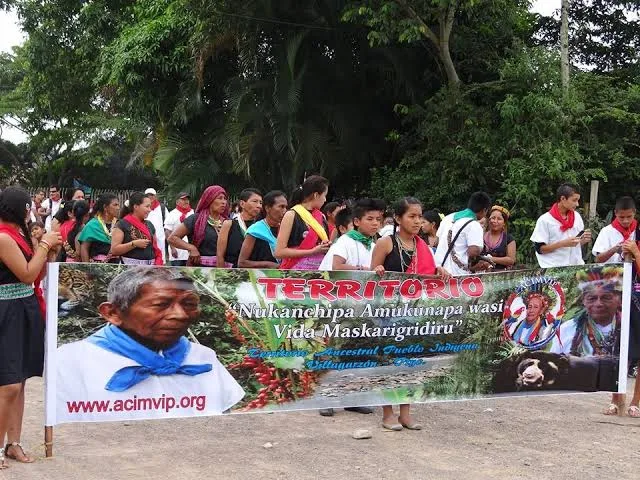
The Association of Indigenous Cabildos of the Municipality of Villagarzón (Acimvip), then led by Carlos López Descanse, who was also one of the founders of the Association, decided to file a tutela before the Administrative Court of Nariño, asserting that the rights to prior consultation, due process and autonomy of the Inga community of Villagarzón had been violated. In July 2015 the Court ruled in its favor and suspended Resolution 0573 of 2012 of the Ministry of the Interior, and the Council of State upheld the ruling in October of that same year. The APE - La Cabaña project, located barely 500 meters from the San Miguel Indigenous Resguardo, was frozen.
The battle of the Inga to prove their existence in the territory was relentless. One of the keys was in the maps made by Jairo Muchavisoy, a forestry engineer from the community and member of the Calauayaco Resguardo. Using sophisticated software called ArcGIS, Muchavisoy set out to cross-reference data from the National Hydrocarbons Agency, the Ministry of the Interior and his community's own data to produce a detailed map that proved the presence of the Inga in the project's area of influence.
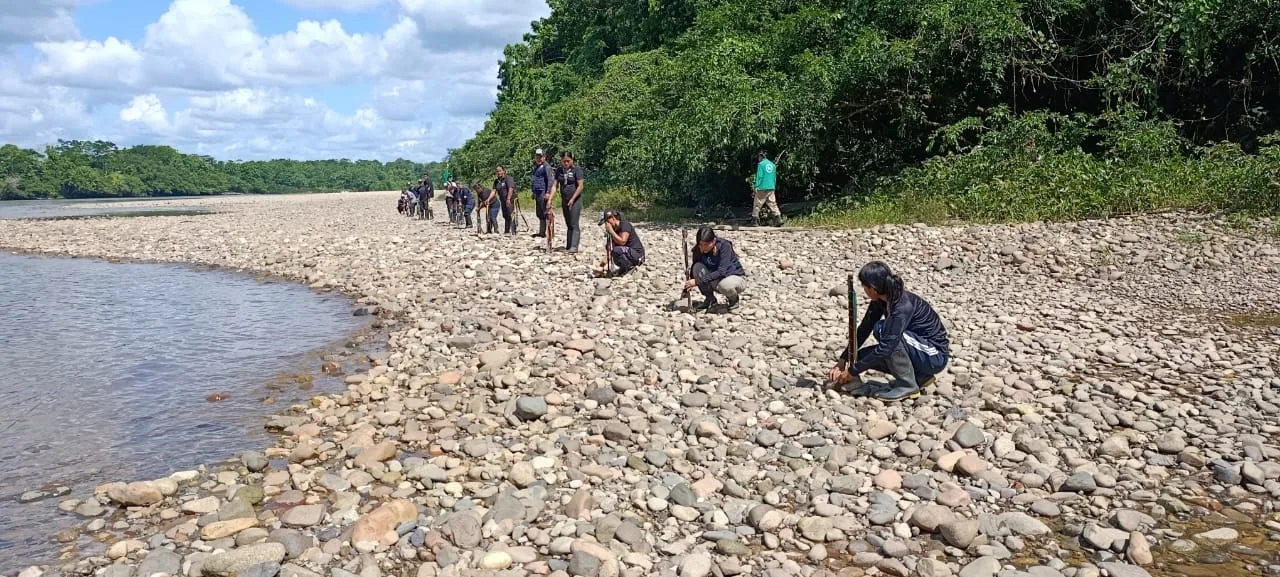
The Nariño Court also ordered an on-site verification to determine what presence the Inga had in the department's oil zone. However, although that decision was handed down in 2015, the verification was not carried out until September 19, 2018. For 7 days Acimvip, the Ministry of the Interior, the Ombudsman's Office, Corpoamazonía and Gran Tierra Energy —which currently has 9 oil blocks in production and at least 20 others awarded according to ANH— toured the PUT 1 oil block; all stated that they saw Indigenous communities in the area.
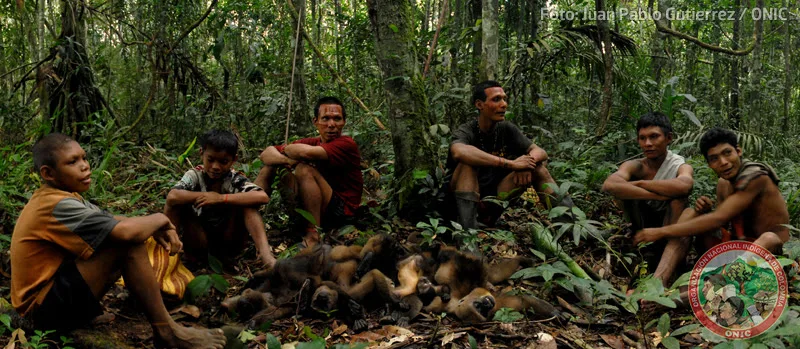
The tutela filed by Acimvip aimed to protect Indigenous rights, including prior consultation, a fundamental step that Gran Tierra Energy skipped with the complicity of the Ministry of the Interior. Paradoxically, this entity, which has the duty to protect Indigenous people and their rights, a year and a half later has still not issued a new resolution certifying the presence of the 10 Indigenous communities of Villagarzón. And something even more serious: the Duque government would be willing to go against the court decision in an attempt to once again give the oil company the green light to resume exploration.
Two media outlets, Mongabay Latam and El Espectador, accessed the draft of what would be the final conclusions of that visit, signed by Ibagué lawyer Luis Fernando Bastidas Reyes, director of Prior Consultation at the Ministry of the Interior, who took office in August 2018. The 44-page document, dated November 14, 2018, states that in the “area of direct influence of the APE – La Cabaña project there is no presence of Indigenous Resguardos, parcialidades and/or Indigenous Cabildos of the Inga People.”
That Ministry of the Interior report would give life to the oil project of Gran Tierra Energy, which has expanded its presence in Colombia, not only in the south of the country. In last year's auction it obtained important blocks in the Llanos Orientales, an operation that exceeded USD $100 million. Despite the new scenario being built by the Ministry headed by Nancy Patricia Gutiérrez, it is clear that the Inga will not give up and will fight to the end to prevent the exploitation of the subsoil in their territory.
*With information from Mongabay Latam, an allied outlet of Las2orillas.