News · 30 November 2021
The Inga of Villagarzón defend their ancestral territory against oil extraction
Vanessa Teteye and Edilma Prada Céspedes, journalists and photojournalism
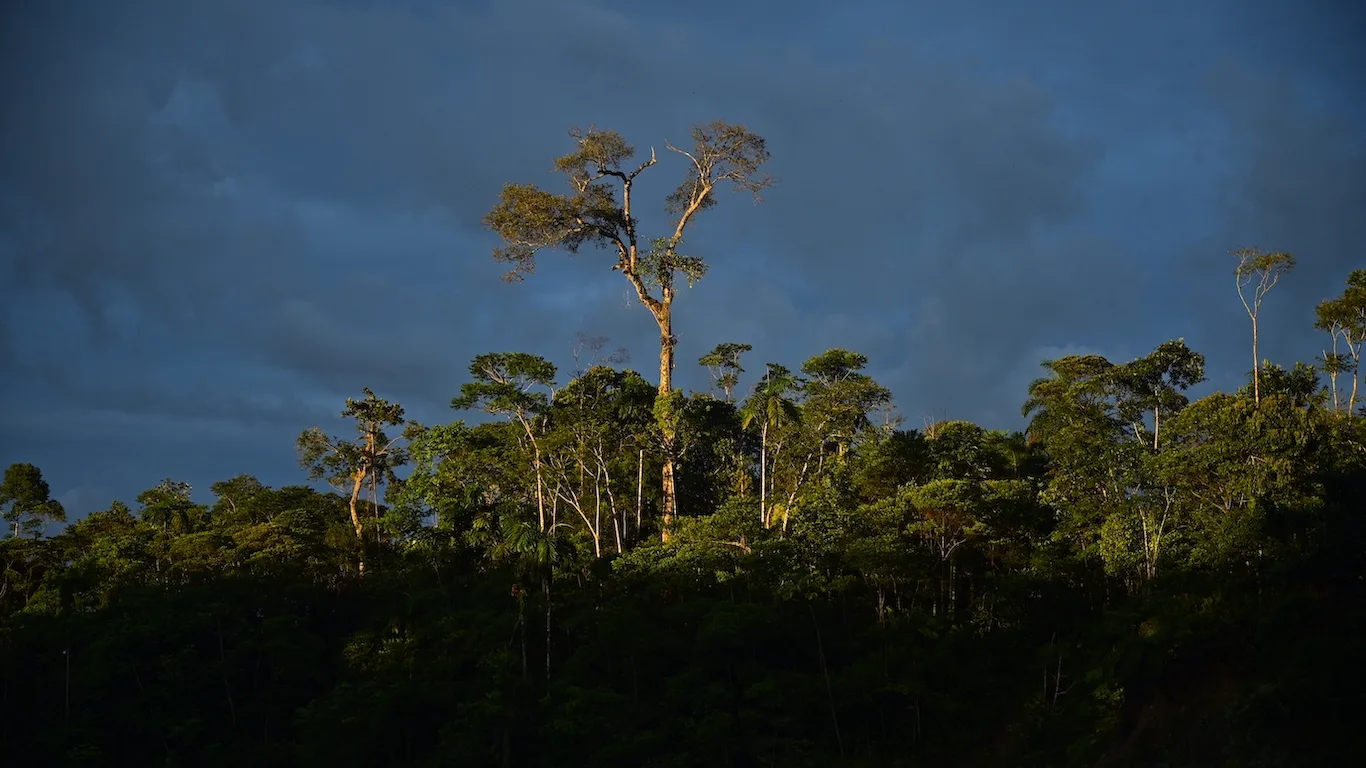
The Inga Indigenous People, settled in Villagarzón, Putumayo, resist oil companies weakening their culture, traditions and collective rights. Their leaders denounce that government entities, including the Ministry of the Interior, have allowed multinationals to exploit part of their ancestral territory without their consent. Their struggle is for respect of their rights to prior consultation and to live in harmony with their sacred places.
The ancestral territory of the Ingas is a natural corridor that extends from the Amazonian foothills in Putumayo, Colombia, to the Peruvian Andes. The roots of the Inga People come from the Inca empire of Tawantisuyu, which formed in the 15th and 16th centuries, became the most extensive in pre-Columbian America and covered nearly three million square kilometers spanning regions of Colombia, Ecuador, Peru and Chile. These facts, cited in several history books and displayed in the main museums of Latin America, are also heard among Inga Indigenous knowledge holders who bring to memory their origins and their journey through the territory (atun ñambi). In Colombia, 19,561 people identify as Inga, according to the 2018 population Census of the National Administrative Department of Statistics (DANE). Most live in the mountain area of Putumayo and are settled in several municipalities of the department, notably Valle de Sibundoy, Mocoa and Villagarzón. They preserve the Inga language (runasimi), clothing, weaving and customs. They practice traditional medicine under the guidance of their doctors (Iachas), holders of great spiritual knowledge and knowledge of plants, among them yagé (ambiwaska).
Leaders of the Association of Indigenous Cabildos (Indigenous traditional authority) of Villagarzón, Acimvip, feel that the Ministry of the Interior is disregarding the ancestral presence of the Inga People in Andean-Amazonian territories by allowing oil industries access to the ancestral territory in Villagarzón, since it issues certifications without recognizing their existence as a people in several areas of the municipality. Acimvip has denounced these facts since 2012.
That is why leaders and communities fight for government institutions to respect their rights, their presence in ancestral territories and places they consider of spiritual and medicinal importance, such as moriche palm swamps (cananguchales) and wetlands, which have been affected by oil exploration. They also demand to live in peace and harmony, rights they have lost in recent decades due to the presence of legal and illegal armed groups that have been harassing and displacing them.
## The beginning of oil exploitation
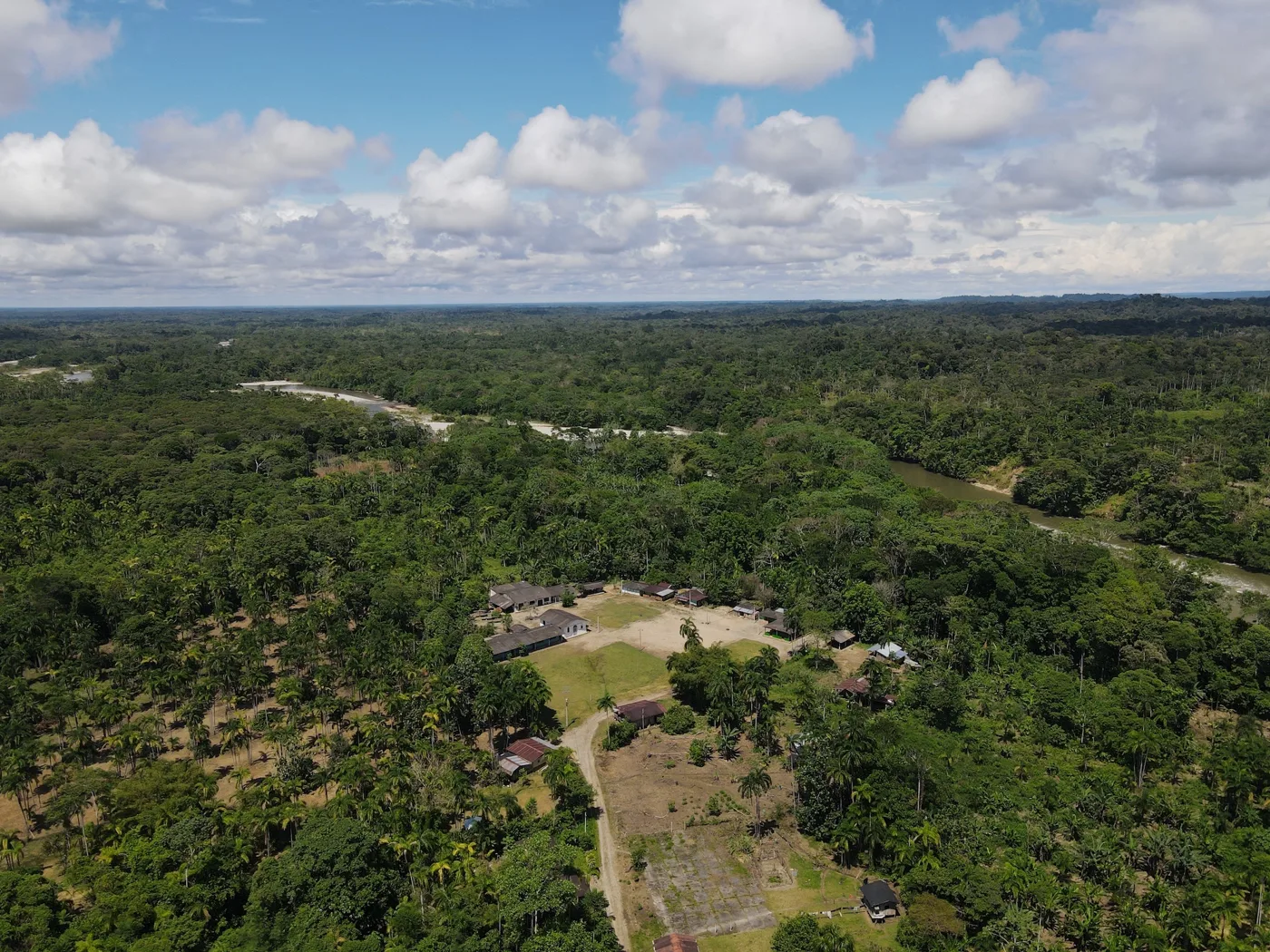
In Villagarzón, 699 families live in nine Resguardos of the Inga People that make up the Acimvip association, the organization that represents them. From that place of mountainous geography, dense jungle and abundant rivers such as the San Juan and the Putumayo —148,000 kilometers extending as a natural border with Ecuador and Peru until flowing into Brazil—, the Indigenous people seek the permanence and survival of their culture, rights and tradition, violated for 60 years, since multinationals arrived to extract oil.
Taita Vicente Jacanamijoy, traditional doctor and governor of the Blasyako Resguardo, recalled the words of the elders who told how the oil companies changed the territory by cutting down forest and opening roads.
“There were only bridle paths, there wasn't even a road, nothing, so the company appeared from one moment to the next, they cut down more than 10 hectares of virgin mountains (forest) and made an airstrip for a light aircraft that landed on a layer of pure chonta (pieces of palm trees on the ground)”, recounted taita Vicente.
These multinationals arrived and intervened in ecosystems such as the salt licks, places where animals feed. “We had good hunting, there was the cerrillo [peccary], the monkeys, the tapir; all those animals went far away because many people came to work”, he added.
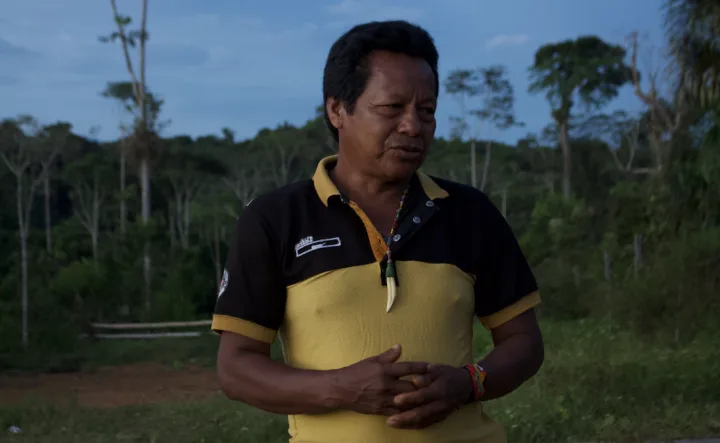
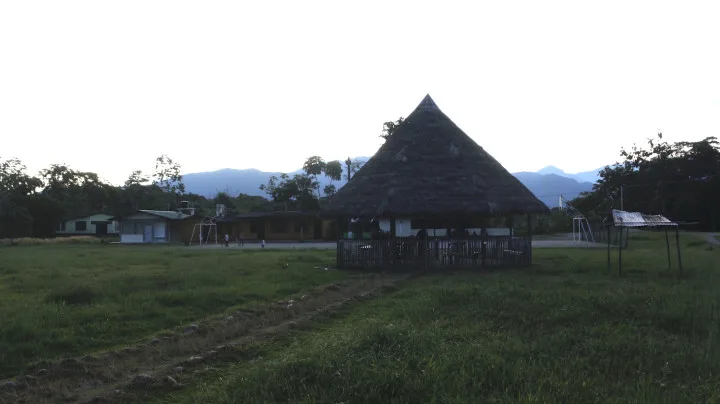
In addition, taita Vicente stated that they polluted rivers and streams. “Pure oil ran in the water, you could not drink water from there, that was the biggest impact”. From the time the taita mentioned to the present, the operations of multinationals in their territories have not stopped. Acimvip has documented that since 1999 more than 20 seismic, exploration and production projects have been carried out by Gran Tierra Energy in association with Ecopetrol, Canadian Petroleum and Emerald Energy.
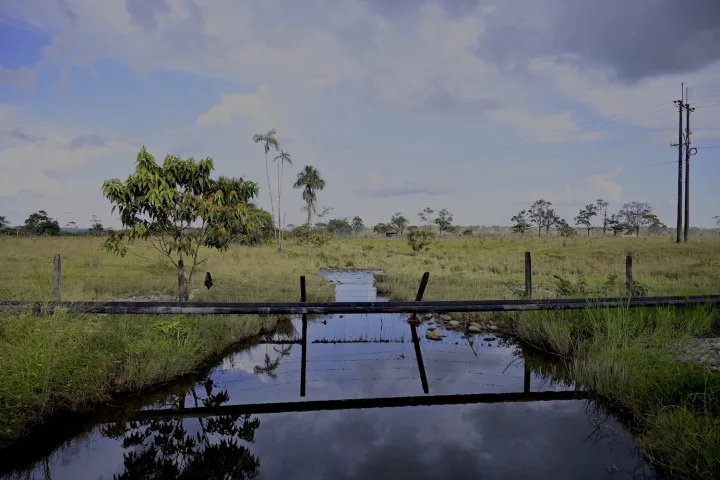
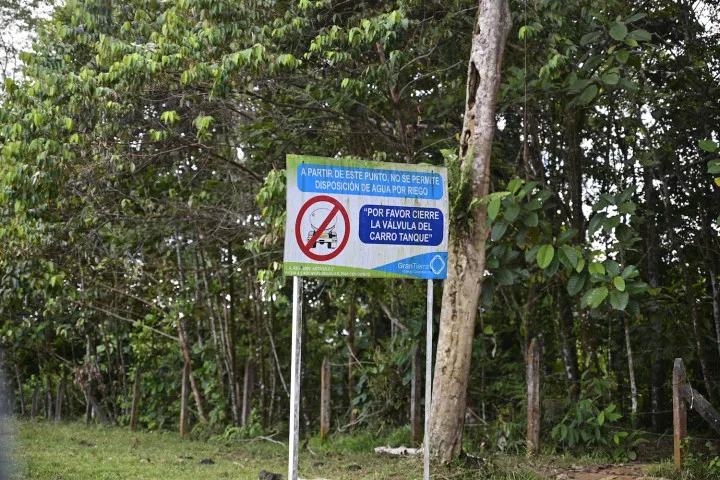
The projects have been carried out in the Indigenous communities and Resguardos of Chaluayaco, San Miguel de La Castellana, Wasipungo, Puerto Limón, Blasyako, Albania, Playa Larga, Florida Alto Sardinas, Sacha Wagra, Alparumiyaco, among others.
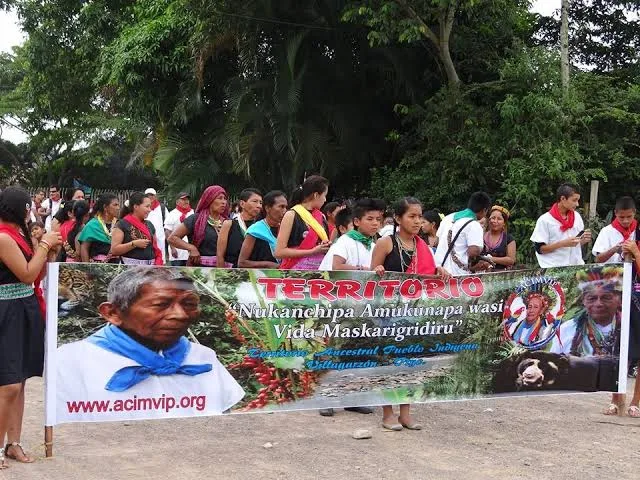
“One of those situations occurred in 1999 with the incursion of the company Canadian Petroleum in alliance with Ecopetrol, which arrived in the ancestral territory of the Inga People of Villagarzón, called in the Inga language Nukanchipa Alpa Mukunapa Wasi kausai Maskarigrideru, where the house of the masters and spirits of the Inga People of Villagarzón is located, where all the natural resources, the water sources and the medicinal plants are”, said Carlos López Descanse, leader of the Inga People and president of Acimvip.
Around 2006, very close to the communities that are part of the San Miguel de La Castellana and Wasipungo Resguardos, construction began on the Costayaco platform with more than 14 wells, without a prior consultation process; according to the accounts of Indigenous leaders, their right to be consulted before the development of projects or works within their territories was not fulfilled.
“And in 2007 the Costayaco drilling began, but they never consulted the Resguardos, the people, about what they were going to do”, said Luis Jansasoy Quinchoa, coordinator of the Caretakers of the Amazon Indigenous guard and leader of the own justice and government area of Acimvip.
The same happened with the Moquetá platform. Between 2011 and 2014, oil was explored and production began in at least seven wells located in areas of influence of the San Miguel de La Castellana, Wasipungo and Puerto Limón Resguardos. According to Acimvip, the right to prior consultation was also violated.
“They have always known about the presence of these communities in the territory and even so we were never consulted. Those platforms are built within Indigenous territories, speaking from our own worldview as a people. Although from the Western side it is said that there are territorial limits (Resguardos) for Indigenous Peoples, within our worldview those limits do not exist, because we are peoples who have lived from gathering, from looking for our food in the territory, that knowledge that has been passed down to us from generation to generation”, stressed Luz Dary Cuara, coordinator of the human rights area of Acimvip.
The right to territory that Indigenous leaders have spoken of is protected by Article 13 of International Labour Organization (ILO) Convention 169, ratified by the Government of Colombia; the provision literally states: “governments shall respect the special importance for the cultures and spiritual values of the peoples concerned of their relationship with the lands or territories, or both as applicable, which they occupy or otherwise use, and in particular the collective aspects of this relationship.”
Between 2013 and 2020, 3,457.379 barrels of oil (average barrels per calendar day, BPDC) were produced in the department of Putumayo, according to statistics reported by the National Hydrocarbons Agency (ANH).
From January to June 2021, crude oil production in Putumayo reached 103,872 barrels, ANH reported.
In Putumayo, hydrocarbon extraction generated royalty settlements of 17 billion pesos between 2012 and 2020, according to data provided by ANH in response to a right-to-information request filed by Agenda Propia.
## The damage to a sacred place for the Inga
In 2012 a cananguchal (moriche palm swamp) was destroyed to create the block called PUT1, APE La Cabaña, of the company Gran Tierra Energy de Colombia LTDA. This natural place is considered a sacred site where the traditional doctors of the Inga People gathered plants and seeds for their remedies and rituals.
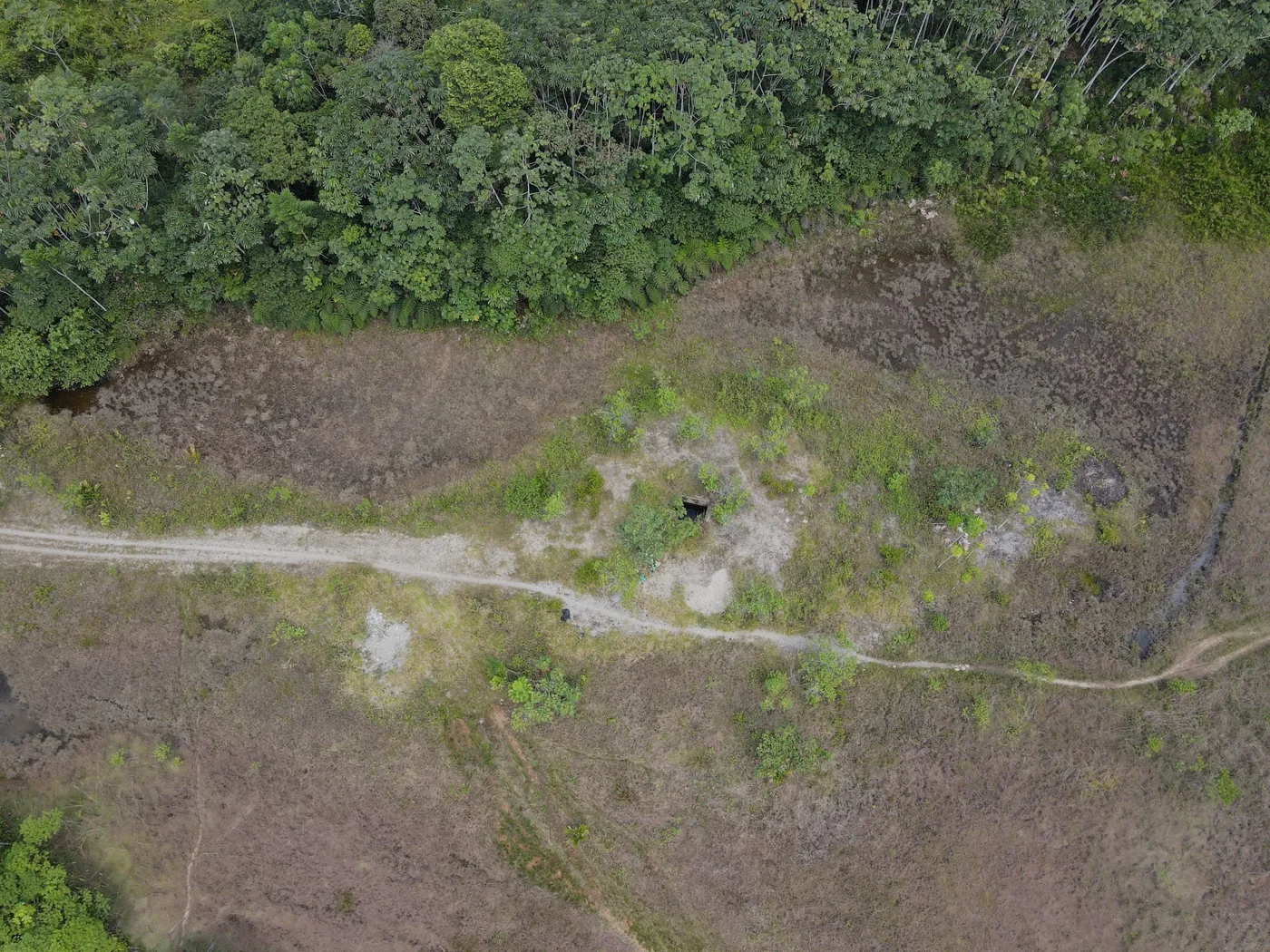
For Indigenous Peoples, the cananguchales or morichales, whose representative palm is Mauritia flexuosa (scientific name), are sacred, because they host an ecosystem where rivers, streams and wetlands are born; medicinal plants grow there and it is home to various birds and mammals. The palm is used to build the malokas of Amazonian communities. Its fruit is used to make chicha and flour, which in turn is also food for fish, birds, the tapir, the paca and the armadillo. From its leaves and shoots they extract the fibers to make handicrafts used in the festivities of Kalusturinda, or forgiveness, of the Inga and Kamëntsä Peoples.
“Here they brought in machines to knock down the palms, they built a very deep well and to fill in this area they also made excavations”, said Luis Jansasoy Quinchoa, as he showed the well and described how they resisted to prevent the oil company from setting up.
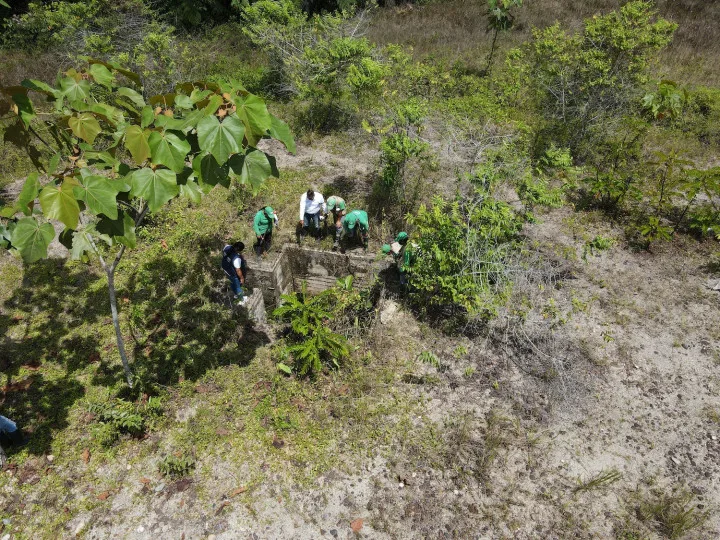
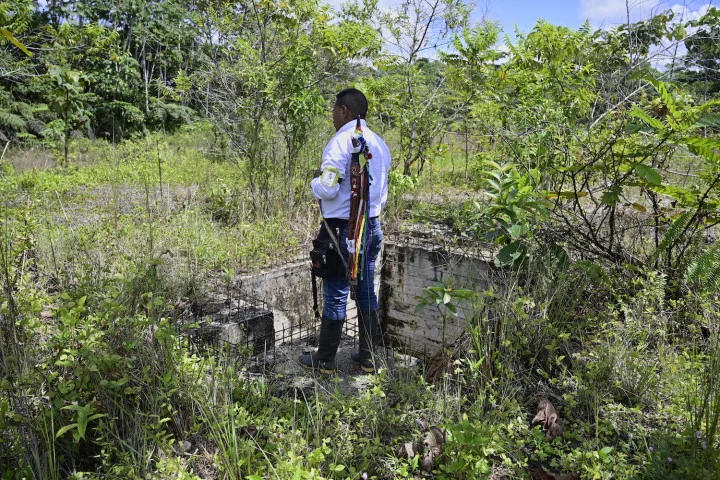
“The communities came together and prevented a large platform from being built to carry out the exploitation process”, recalled Luis Jansasoy.
Today, in that cananguchal only dry palms can be seen and little trace of what was once a wetland. Although 10 years have passed since the intervention, mother nature still struggles to recover.
The vegetation is growing slowly, according to the Indigenous guards and authorities of the Inga People, who make regular tours to carry out control and surveillance in the area; they hope to see a large body of water again and thus continue practicing traditional medicine.
“It is a sacred place where all the spirits are, where we gather the seeds, the healing plants. Spirituality, since it is intangible, cannot be seen or touched, but we who are healers talk with them (the spirits), practice with them, dance”, explained taita Vicente.
At that site, which from the air looks like an open sore, the oil company's works had advanced after the Ministry of the Interior disregarded the presence of the Ingas. Through Resolution 0753 of 2012 [ACIMVIP clarification: the correct number is Resolution 0573 of April 3, 2012, of the Directorate of Prior Consultation of the Ministry of the Interior], the Ministry certified that “there is no Indigenous presence in the area of direct influence of the APE La Cabaña project”, which led to exploration by the company Gran Tierra. In addition, the National Environmental Licensing Authority (ANLA), through Resolution 0717 of 2014, had granted the environmental license to the multinational to carry out said project, over an area of 629 hectares.
In June 2015, Acimvip filed a tutela action for the violation of the rights to prior consultation, due process and autonomy of the Inga Indigenous community of the municipalities of Villagarzón and Puerto Caicedo, which were protected in July of the same year by the Administrative Court of Nariño. In the judgment, the Court ordered the suspension of the legal effects of Resolutions 0753 of 2012 [ACIMVIP clarification: the correct number is 0573 of April 3, 2012] and of 0717 of 2014 until the presence or absence of Indigenous communities in the territory where the oil project is being carried out was verified. The Court's ruling was upheld by the Council of State in 2015.
“Even though the Ministry disregarded us, we are still here as caretakers of the Amazon, with the mandate of our elders; we do not do it because we want to go against development, simply that here the right of Indigenous Peoples to free and informed consultation has been violated”, said Luis Jansasoy.
After the rulings, Acimvip has carried out several verification visits to the territory, together with the Office of the Inspector General, the Ombudsman's Office and the Ministry of the Interior, to identify the various social, cultural and spiritual impacts of this project on the Indigenous Peoples and peasant and Afro-descendant communities of this area. In 2021 their struggle continues.
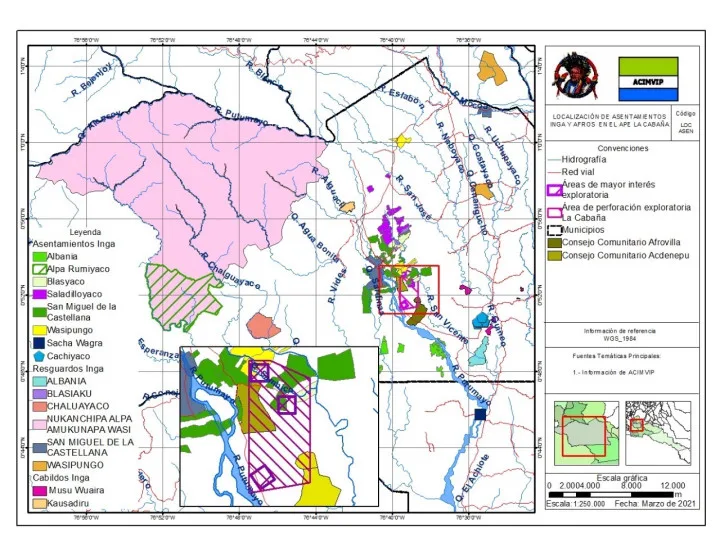
They have even produced maps (see below) showing the location of the Resguardos, the communities and the rivers, as well as the oil blocks, the latter with information from the ANH. The cartographic work is part of Acimvip's evidence to demonstrate in court that APE La Cabaña and the other oil blocks are indeed within the area of influence of the Inga communities.
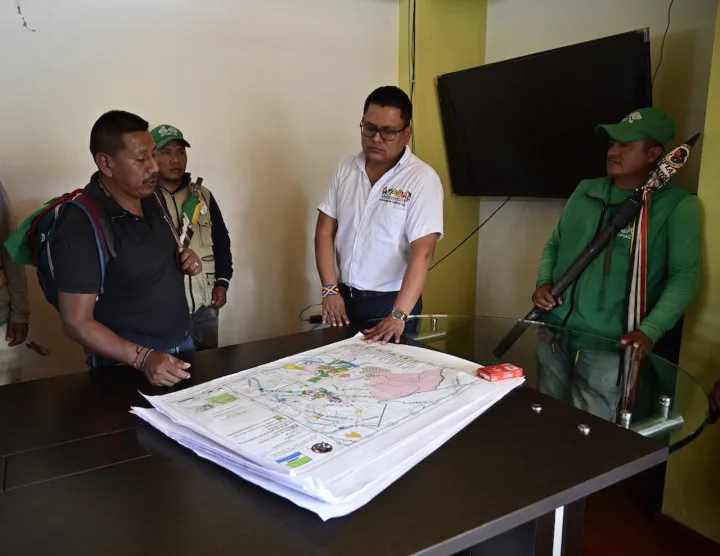
Vanessa García Gómez, a lawyer for Acimvip, is concerned that the Ministry of the Interior is establishing strategies to determine the impacts of the APE La Cabaña project. “They arbitrarily point out where the cultural and territorial impact of the project could be and they limit it”. She demands that these be defined on the ground and with the presence of the communities. “We are already in 2021, six years into this process of demanding rights, insisting that things be done right, insisting that the fundamental rights of Indigenous Peoples be respected”.
In addition, the Indigenous organization also concluded that another direct impact on the Inga People is the legal impediment to the expansion of the Resguardo San Miguel de La Castellana, since this oil project overlaps with the area claimed for the expansion.
## Abuses and aggressions against women, leaders and Mother Earth
Militarization and restrictions on free movement are other concerns of the communities. “Our custom is to be able to move freely in our territory; when a multinational comes in, the security forces come behind it, and they sometimes prevent us from moving around to carry out our fishing and hunting activities”, said Jesús Arturo Jojoa, governor of the San Miguel de La Castellana Resguardo.
Community organization has also been permeated by the oil companies; in several cases leaders have been influenced with false expectations of project support. “Whether for money or for work, some people who have been at the head of certain processes have been permeated, and in this way they then try to confuse the communities; because they lack knowledge of leadership, they are very easily deceived and create division within the communities”, recalled mama Aida Jacanamejoy Miticanoy (mama is an expression of recognition for elder women, authorities and knowledge holders of the community), former governor of the San Miguel de La Castellana Resguardo.
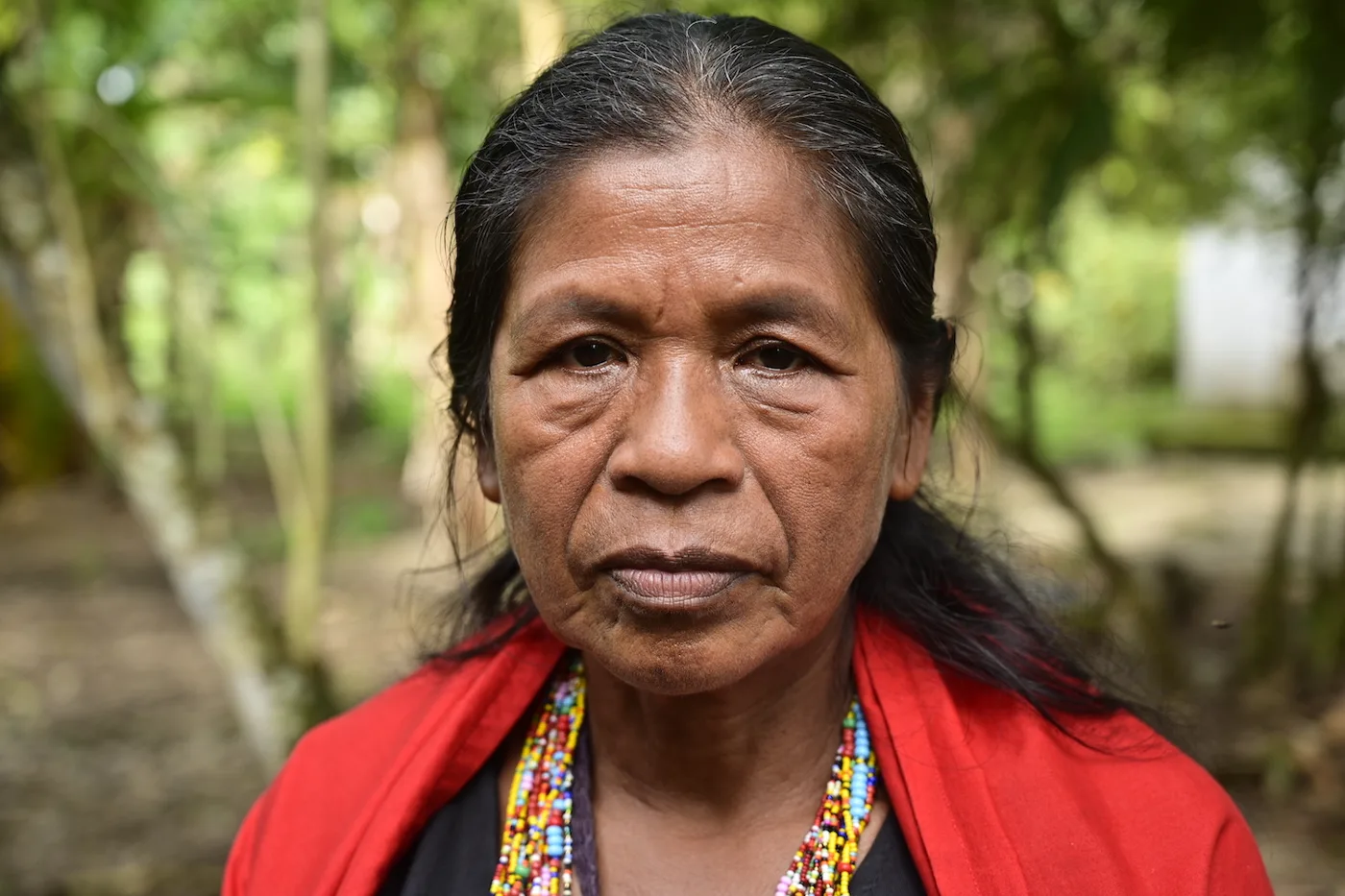
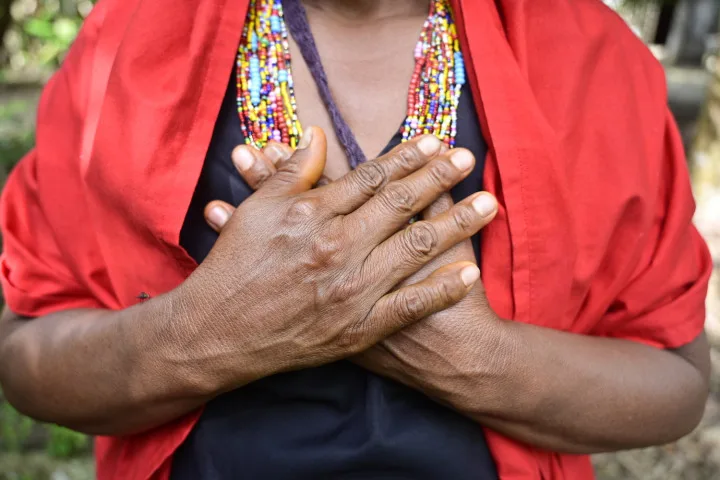
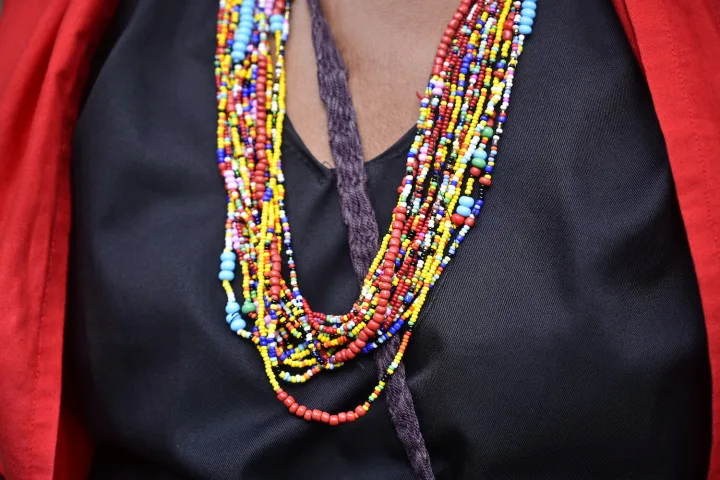
Mama Aida, who wears her traditional dress, a tupuye (blouse), a black pacha (skirt) and a red shawl that stands out against her brown skin, states that the marks and damage are deeper in the territories.
Military personnel and officials serving multinationals have abused the dignity and integrity of people, particularly women.
For mama Aida, one of the strongest and hardest episodes to remember, which she recounts in tears and with a trembling voice, was in her youth, when she and a friend were attacked by workers of an oil company.
“When I was 16 years old they tried to abuse us, it was the oil company there on the road, here in El Recuerdo. They had a camp and they chased us, I was studying with another classmate, she was younger, I was older. I resisted, we looked and lied that we had partners, so those men got scared and went back”. She said this with embarrassment and stated that when that happened she did not know that such abuses are crimes, and now she prefers to talk about her case so that women are respected.
These are accounts that still generate fear and mistrust in the communities, because they are wounds that have not yet healed, like baskets of memory that have not been covered. Reliving these memories is a latent pain for the elders, which is why, through leadership, the word and medicine, they call on the oil companies and the State to respect the rights of the Inga communities and to safeguard this territory, which is a source of life for Colombia and humanity, to protect the mother jungle and the communities so that the Indigenous Peoples may continue to survive.
For mama Aida, these extractive projects are also abusing the body of Mother Earth, since these operations generate pollution and damage to the territory.
“Oil is the blood of Mother Earth, we want them to let Mother Earth live, she has blood like us, that they do not harm us (…) We have to take care, we have to be very clear that our territory is a sacred site”, reflects mama Aida.
Among their memories is also the image of how the oil companies began clearing roads to make way for machinery, destroying the mother jungle and in turn leaving waste in the communities.
“They threw things in the garbage and we went to pick them up there, for example, dishes, spoons, they threw that away, imagine, and you don't know it is contaminated, I knew that since my childhood”, recounted mama Aida.
While she was telling her story, two helicopters passed over the community of San Miguel de La Castellana, each carrying a tank hanging from a net. Mama Aida commented that it is common to see helicopters transporting materials and to hear the loud noise of the aircraft.
“One day, we saw a canister fall next to my godfather, about 50 meters away there was a ditch, two canisters fell, surely it came loose from the bag, as they say, but I don't know how it happened, but it dropped, one burst and the water fell, and well, all that water, that liquid, went away and the other stayed whole. I get scared when a helicopter passes with those things”, said mama Aida.
For the human rights coordinator, Luz Dary Cuaran, the helicopters also generate noise pollution and have driven several animals away, affecting hunting. “That affects our food security, hunting and the balance of the territory, because we see that everything that lives, even the smallest, fulfills its function, she explained.
Added to this are the flares they have built on the Costayaco and Moquetá platforms. Flares are tall towers that function as torches and produce fire 24 hours a day to burn the gases generated by oil extraction operations. While companies such as Ecopetrol claim that the flare is a safety system for people and environmentally friendly, for the Indigenous people the permanent illumination of the flames has caused the death of birds that fly nearby, affects the normal reproduction of animals such as leafcutter ants -used as food by the communities- and weakens the growth of medicinal plants.
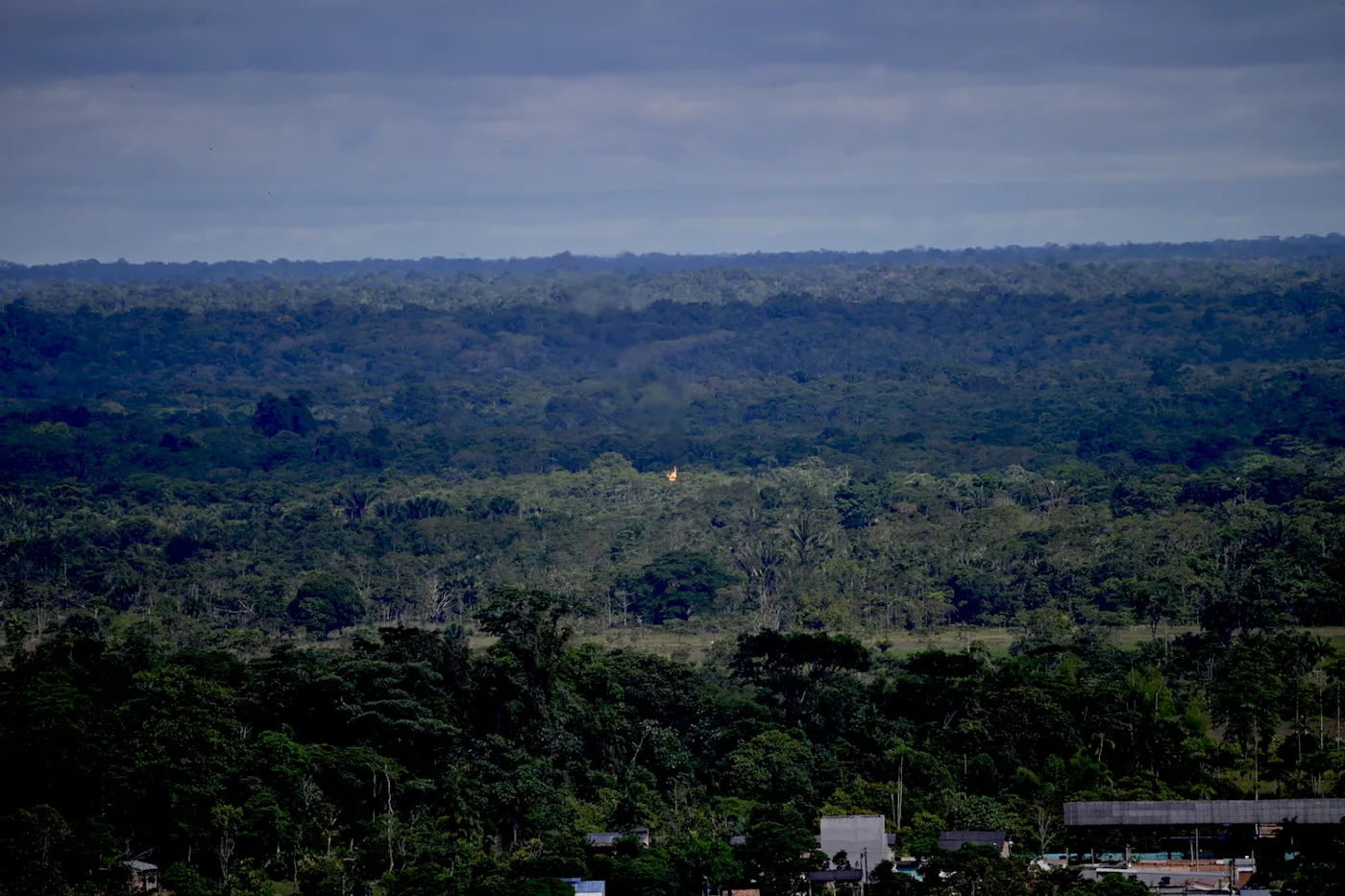
“The workers there at that site (Costayaco) go in the mornings to collect the birds and bury them; all of us who have happened to go there have noticed that”, said Jesús Arturo Jojoa.
All these complaints add to the contamination of water sources. According to Luis Jansasoy, one of the major impacts occurred in 2020, when the oil pipeline that crosses the Mocoa River, reaching the Resguardo of Costayaco, ruptured, causing a serious environmental disaster and the loss of native ecosystems.
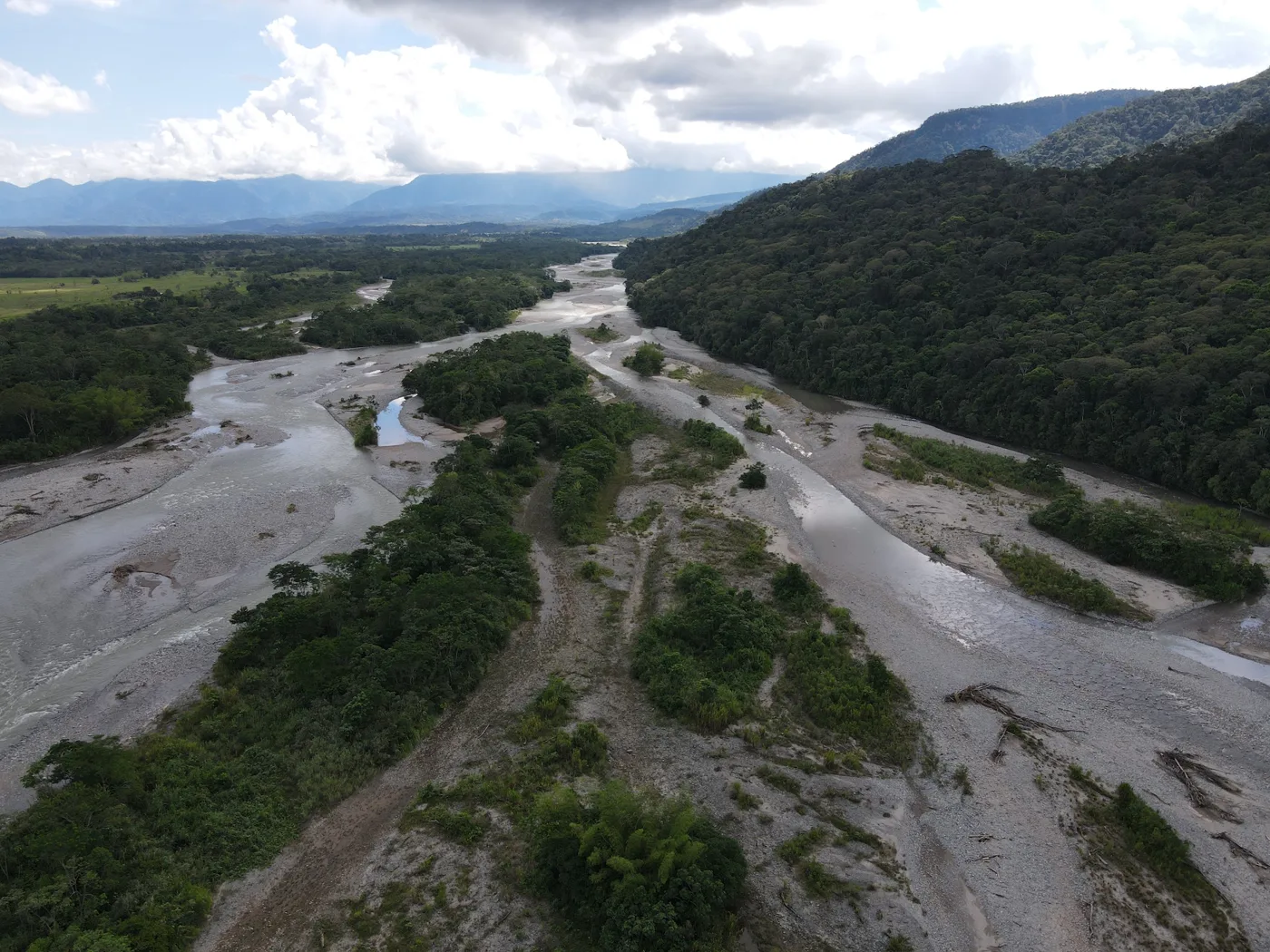
Another problem has been the armed conflict, which has prevented the recognition and legal certainty of their territories. The conflict in Villagarzón had left 16,739 victims as of August 31, 2021, according to data from the Single Victims Registry.
“Much of the Indigenous population was displaced, as were some leaders who carried out territorial defense so that the company and the oil industry would not enter. Later, the company Gran Tierra Energy Colombia arrived, which currently holds most of the exploration projections granted to it by the ANLA in 2011 and 2012”, said Carlos Descanse, president of Acimvip.
## Defense and protection of the territory
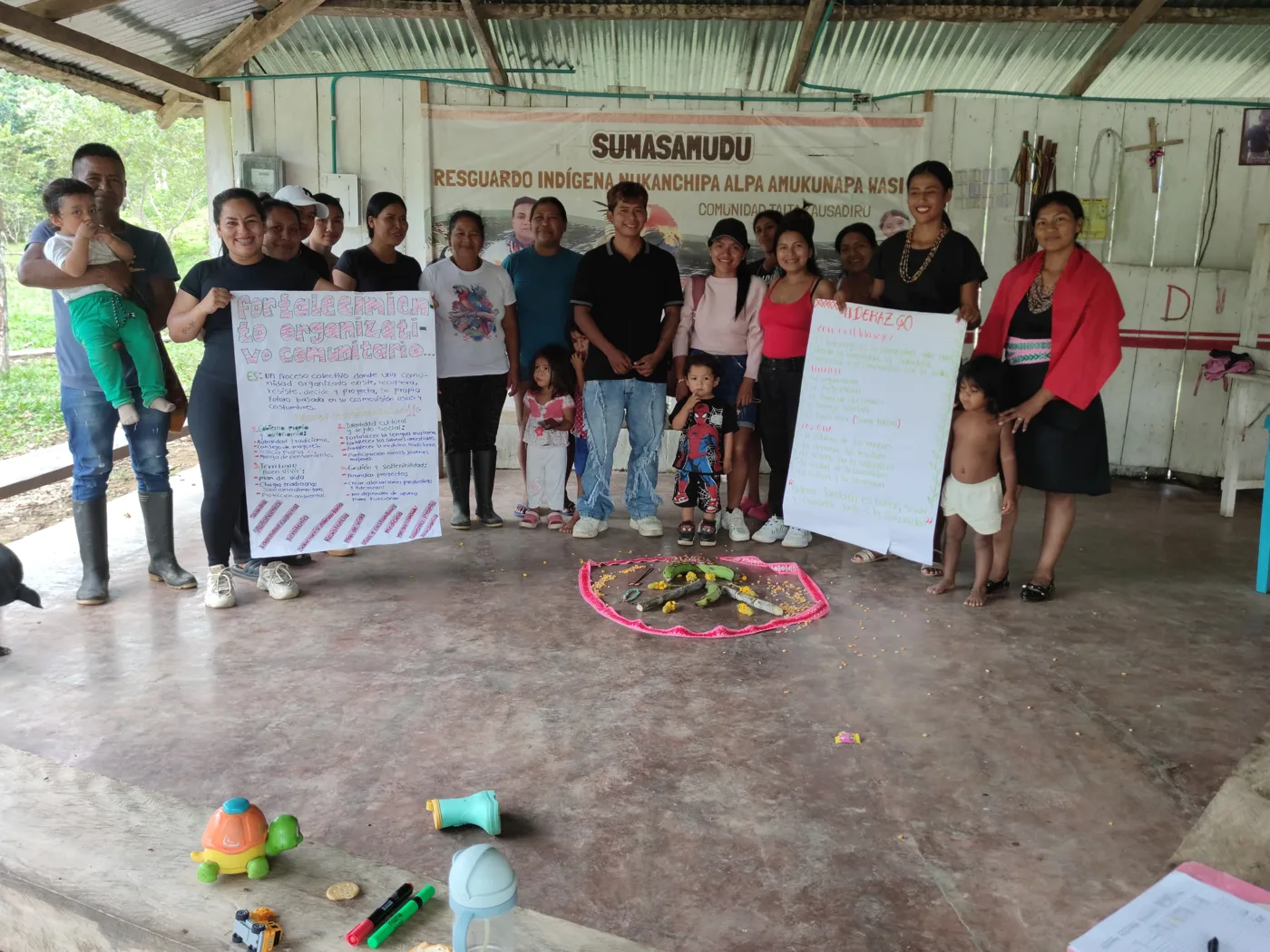
The environmental and social impact on their territories has led the Indigenous people to strengthen their knowledge of legal matters in order to protect the communities and secure assistance pathways in cases of violations of their rights as original peoples and victims of the armed conflict. It has also led them to hold on more strongly to their knowledge and traditions as a path of struggle and resistance. That is why, following the counsel of their elders, they created the Indigenous guard: Caretakers of the Amazon.
“From our authorities comes the idea of the Caretakers of the Amazon, as chaskis, wasikamas of the upper, middle and lower Putumayo, in order to safeguard our territory. It is in our staffs that the strength and spirituality of our elders is deposited; we never carry weapons that can harm humans, we care for our territory, we prevent any risk that affects our people, both spiritually and culturally”, explained Luis Jansasoy, coordinator of own government and justice at Acimvip.
The guard is made up of young people, women and knowledge holders who, voluntarily and without any financial compensation, walk the boundaries and paths of their “Nukanchipa Amukunapa Alpa” (which translates as the caretakers of this territory in runasimi, the Inga language). They seek to prevent the indiscriminate hunting of animals, illegal logging of forests and environmental harm by extractive companies.
“Our team has been training in the general system for disaster and risk prevention, such as the Mocoa avalanche (2017), where we acted as Indigenous rescuers, and today we are dedicated to strengthening own justice and government in the different territories”, added Luis Jansasoy.
Their activities as guards usually involve long walks across rivers, mountains and forests. They carry only small backpacks with a hammock and a flashlight; they do not have physical protective equipment such as helmets, machetes and other supplies.
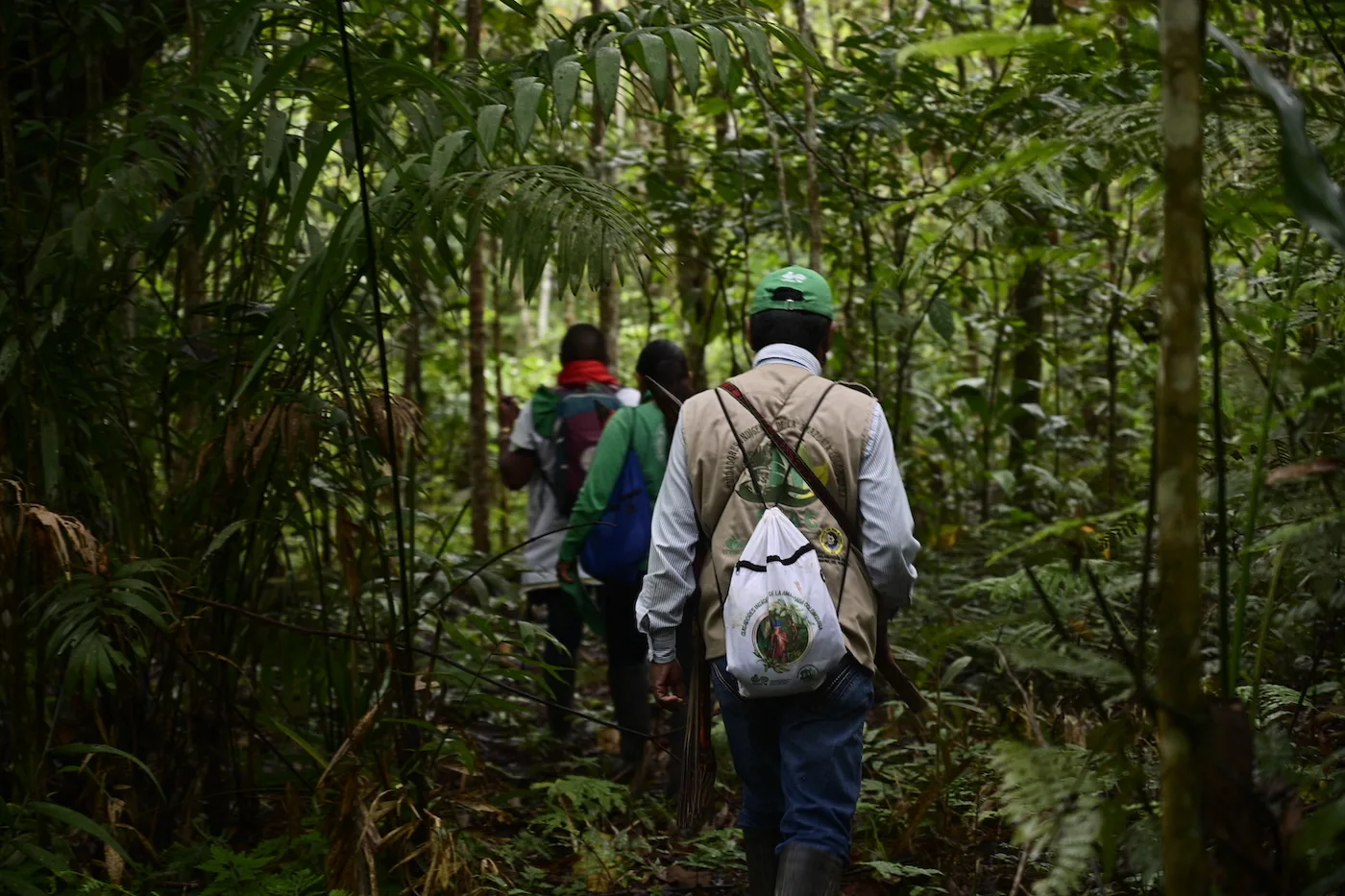
However, their form of care is spiritual. On their patrols they perform harmonization rituals in the forest to ask the spirits of the territory for permission and protection, with songs, plants, incense and wayra leaves -which is the breath of life-, so they can move more safely through different places and communities.
“What matters about Mother Earth for us is life, caring for her so as not to contaminate her and to be able to enjoy good living”, explains Luz Mery López Jamioy, a member of Caretakers of the Amazon. For the young people who are part of the guard, their work and voice are a learning exercise. From a collective and community vision, Mother Earth is cared for in order to keep their culture, roots and tradition alive.
“For Inga children and young people, it is to tell them to join in caring for our nature, the water, not to throw garbage because there are animals there, it causes an environmental impact”, said Steven Castillo, one of the youngest members of the Caretakers of the Amazon guard.
Arley Jasasoy and Willy Macías, members of the Indigenous guard, share that caring for water sources is essential. “We protect the streams, our rivers and the soils where the mountain ranges arise so that our generation, our children and grandchildren have a way to subsist”.
Despite the difficulties in their communities, the presence of oil companies and the threats to their leaders, the new Inga generations will continue walking their territories, holding mingas of resistance and practicing their own knowledge such as ancestral medicine, dance, music and their native language.
Their struggle is also an example for other peoples living in Putumayo, such as the Cofán, Siona, Uitoto or Murui, Kamëntsa, Nasa, Pastos, Awá, Emberá and Killasinga, among others, who have also been harmed by oil companies, illegal mineral extraction and the armed conflict, according to the National Indigenous Organization of Colombia, ONIC.
Originally published by Agenda Propia on November 30, 2021