News · 13 December 2021
The Inga People and the defense of rivers against extractive projects
This story was made possible thanks to an alliance between El Espectador and the organization Ambiente y Sociedad.
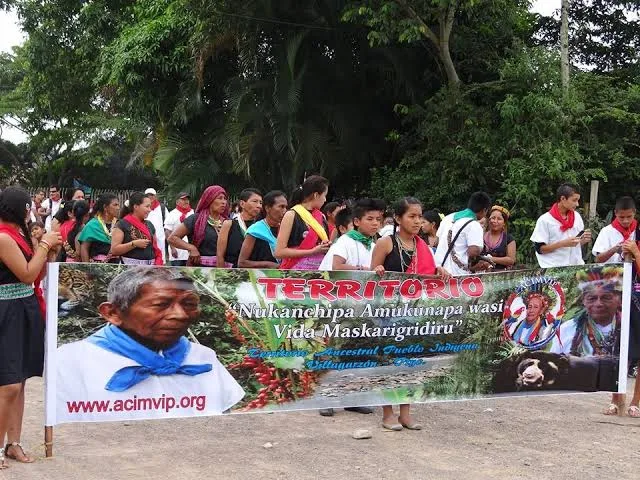
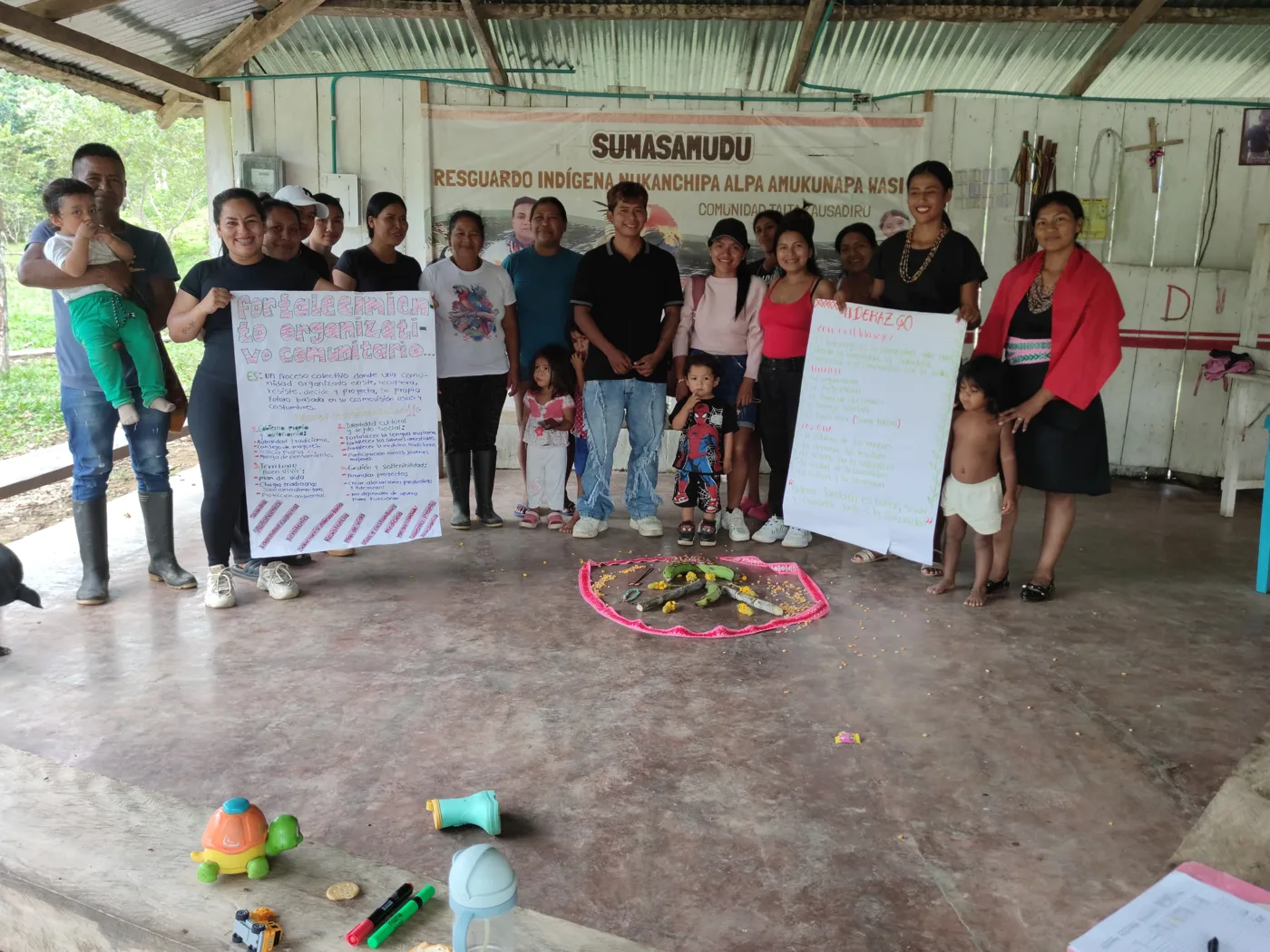
The Inga People of Villagarzón, in Putumayo, have organized so that the State recognizes that, for centuries, they have inhabited the territory where an oil exploration project is planned. One of their main concerns is the possible impacts on water sources.
María Beatriz Otaya Andaquí is a knowledge keeper and traditional healer of the Inga People of Villagarzón, in Putumayo. Since she was a child, her father, who was also an authority and traditional healer, took her to walk their ancestral territory in search of medicinal plants.
“We would walk down along the bank of the San Vicente River. After two days of walking we would gather some plants and come back again. Eight days later we would make the same trip, but up the San Vicente. When we were back home my father would say to me: ‘Well, now come, my daughter, and get to know them. This one is for fever, this one for yellow discharge, this one for white discharge and with this one you will heal people. When I die you will know everything’”, says the traditional healer. “And so it was”.
“For 15 years situations have been arising that put at risk the life, the territory and the persistence of the Inga People due to the presence of extractive companies in our territory”, says Carlos López Descanse, president of the Association of Indigenous Communities of the Municipality of Villagarzón (Acimvip). “Explorations have been carried out without the due consent of the communities and a platform was built in Indigenous territory where the communities are settled, disregarding their presence and with a complete disregard for the fundamental rights of Indigenous Peoples”, he explains.
The platform López Descanse refers to is part of the La Cabaña exploratory drilling project of the company Gran Tierra Energy, which seeks to determine the presence of hydrocarbons by drilling nine oil wells in an area of 629 hectares. But it is not the only case. A calculation led by the Asociación Ambiente y Sociedad found that of the 51 oil block contracts assigned in the Colombian Amazon, 39 overlap with 83 Indigenous Resguardos. Most worrying, the researchers found, is that prior consultation —a constitutional right that exists so that communities can decide whether natural resources may be exploited in their territory— is not always fulfilled.
This happened in the case of APE La Cabaña. In March 2012 the company Gran Tierra Energy asked the Ministry of the Interior to certify the presence or absence of ethnic groups in the project area. That same year, the Ministry's Prior Consultation Directorate issued a certification (573 of April 3, 2012) stating that no presence of ethnic communities was registered in the project area. However, the Inga community of Villagarzón and Afro-Colombian communities live just meters from where the exploration is planned. In fact, the project land had been the former territory of an Inga elder of the San Miguel de la Castellana Resguardo, where traditional medicine was practiced and which was considered a meeting place of spirits.
## A concern for rivers and water
One of the community's greatest concerns about the project is the impact on its water sources. According to them, the exploration platform of APE La Cabaña is located in a sacred place where the masters of nature dwell: an area of wetlands, springs and streams which, if affected, would compromise their most important water sources: the San Vicente River and the Putumayo River.
According to a document submitted by the company Gran Tierra to the Ministry of the Interior, the watersheds of the Putumayo and San Vicente rivers, as well as the micro-watersheds of the Sambico stream and other minor drainages, are within the project's area of direct influence, where three water intake points are also planned.
“There, where they built the APE La Cabaña platform, was a water spring. It was the beginning of the canangucheras, the start of the streams that flow into the San Vicente River”, adds Buesaquillo. The canangucheras, also known as moriche palm, together form a type of wetland because of their capacity to store and purify water, and they are sacred plants for the Inga. “They are plants we benefit from for their food, because they bear fruit, for the water they retain and because spiritually for us it is where all the energy is to be able to persist with the medicine”, says taita Vicente Jacanamejoy, an Inga authority. The San Vicente River, for its part, crosses the ten communities of the Inga People of Villagarzón, so, regardless of how far they are from the project, they all feel they would be affected.
Anthropologist Diana Silva, who is part of Acimvip's technical support team, states that “the San Vicente River is the gathering center and the means of subsistence of the communities” for the Inga People. As she explains, it is there that clay is collected for medicine and for making utensils such as pots, and also where seeds are gathered, fishing takes place and water is drawn. “If that is polluted and disappears, the survival of the Inga People is simply affected, both physically and culturally”, she says.
After several appeals, a third verification visit was carried out this year, between March 1 and 8, requested by the Administrative Court of Nariño. The aim was then to reach a conclusion on the presence of ethnic groups in the project's exploratory drilling area. It was a week visiting Resguardos, chagras, medicinal plant reserves, cemeteries, sacred bodies of water, salt licks and other sites of ethnic interest that the communities believe would be affected if the exploration project continues.
Through a resolution published on October 27, the Ministry of the Interior finally certified that prior consultation was applicable with the San Miguel de la Castellana Indigenous Resguardo for the APE La Cabaña project, only one of the seven plaintiff Resguardos that requested verification.
Now, the reports of all parties are before the Nariño Court, which must deliver a response. The project, meanwhile, has been suspended since 2015. “It is important to highlight that Gran Tierra Energy has complied with and addressed all orders issued by the legal, environmental and prior consultation authorities”, the company states.

Originally published by Asociación Ambiente y Sociedad on December 13, 2021