News · 19 April 2022
How the State made the Inga People invisible before the oil company Gran Tierra Energy
In 2014, the National Environmental Licensing Authority (ANLA) granted Gran Tierra Energy's Colombian subsidiary a license to search for oil in Villagarzón, Putumayo. The Ministry of the Interior denied the presence of Indigenous communities until 2021, when it recognized the need for prior consultation with one Inga Resguardo. But the Cuestión Pública – Mongabay Latam alliance found that the project would be carried out in the heart of at least six more Resguardos of this People, ignored in the process. After 10 years of unwavering resistance in the country, the Inga are about to take their case to the Inter-American Court of Human Rights.
By: Cuestión Pública and Mongabay Latam.
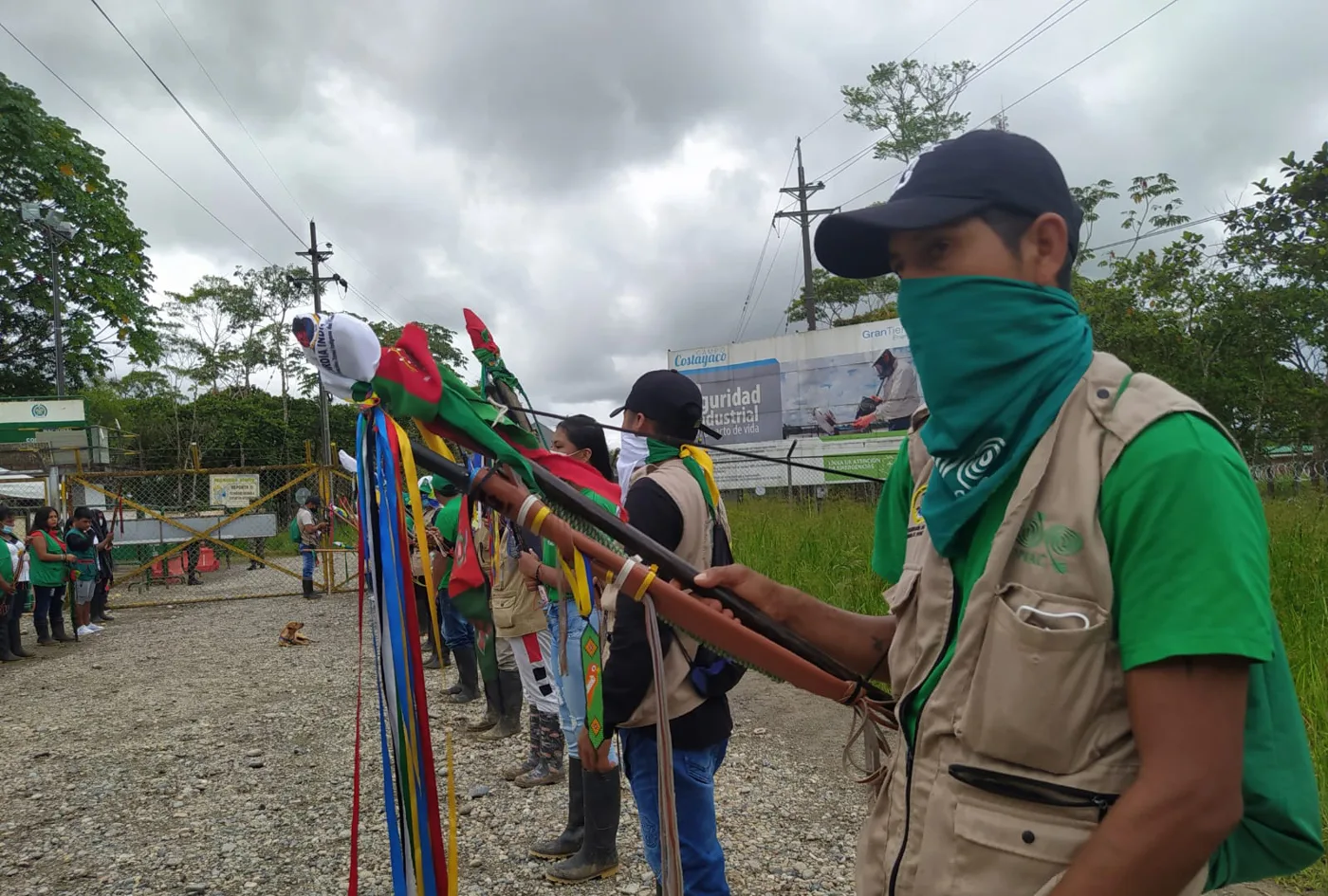
The Canadian company Gran Tierra Energy has spent more than a decade trying to consolidate its oil projects in the Colombian department of Putumayo, in particular with the La Cabaña Exploratory Drilling Area (APE) project in the municipality of Villagarzón, in the Colombian Amazon. Along the way, however, its ambitions have collided with at least seven Indigenous Resguardos of the Inga People. In this dispute, national government entities have denied the presence of the Inga and have given the green light to hydrocarbon exploration and exploitation.
By ignoring or failing to recognize their presence, the Inga People consider that their right to prior consultation to admit or not Gran Tierra's project in their territories has been violated, a project they have resisted since 2012. That year, the company's Colombian subsidiary applied to ANLA for the license to begin the search for oil in Villagarzón, an area where crude abounds, as do conflicts between oil companies and Indigenous settlements.
Although the La Cabaña exploration platform was installed in 2014, after obtaining an environmental license from ANLA that same year, in 2015 a tutela filed by the Inga managed to stop the oil project, but not the repeated violations of their rights, according to the communities. Of the seven Resguardos closest to the project, the presence of only one was recognized. The others are joining forces to take their case to the international level, while trying to survive, according to the testimonies gathered for this publication, the environmental and spiritual impacts derived from that project, the intimidation and the invisibilization by the State.
“We will take the defense to the last instances, including escalating the case to the Inter-American Court of Human Rights (CIDH), if the Colombian State does not guarantee the rights we have as peoples at risk of disappearing physically and culturally”, Carlos López Descanse, a member of the Inga People and president of the Association of Indigenous Cabildos (Indigenous traditional authority) of Villagarzón (ACIMVIP), a community organization founded in 1998 in defense of the rights of the Indigenous communities of the municipality, told this alliance.
## Ghost territories
By mid-2012, the Canadian oil company requested an environmental license from ANLA to launch the La Cabaña project. To do so, three months earlier it had to go to the then Directorate of Prior Consultation (now the Directorate of the National Prior Consultation Authority), an agency of the Ministry of the Interior, to find out whether there were Indigenous, Afro or other minority groups in that area.
This point is key, because if the area was clear, the oil company could move forward without requiring prior consultation with the communities in the area. Prior consultation is a rights-guaranteeing mechanism in Colombia, whose use in Putumayo resulted in communities failing to reach agreements aimed at respecting their territory in 68% of cases. Of 159 prior consultations in Putumayo between 2011 and 2020, only 51 reached an agreement, according to data from the Crudo Transparente portal.
On April 3, 2012, Rafael Antonio Torres Martín, director of the Prior Consultation office of the Ministry of the Interior, then headed by Germán Vargas Lleras, signed the certification of the non-presence of Indigenous communities in APE La Cabaña, thereby denying the Inga Resguardos the fundamental right to participate in consultation processes.
However, the analysis of a database built by Mongabay Latam for the special series ManchadosXelPetróleo, -with data from the Amazon Georeferenced Socio-Environmental Information Network– based on the presence of oil blocks in areas inhabited by Indigenous communities in Colombia, Bolivia, Peru and Ecuador, found that the area licensed by the State to Gran Tierra would cover 80% of the Inga Resguardo Wasipungo and 100% of the Resguardo San Miguel de la Castellana. A third Inga Resguardo, Blasiaku, also has 100% of its area licensed to the La Cabaña oil project. It was also found that the Inga Resguardo Chaluayaco has a 100% overlap with another Gran Tierra block (PUT-10).
In other municipalities of Putumayo, other oil companies also hold licenses for areas with 100% overlap with the Inga Resguardos of Calenturas (Mocoa) and Wasipanga (Puerto Guzmán), as is the case of Amerisur, a company facing questions that you can read about in an investigation carried out by this alliance.
“We have been able to see that there is bad faith on the part of the institutions, which are not interested in having our rights such as prior consultation recognized. (This) is one of the main tools we have to protect our territories from the interests of third parties who do not recognize our vision (…)”, Carlos López told this alliance.
According to a document from a civil society organization that has advised the Inga, called Asociación Ambiente y Sociedad, on May 31, 2012, Gran Tierra Energy submitted to ANLA the environmental impact study to apply for the license for the La Cabaña project, which contained the certification from the Ministry of the Interior that disregarded the presence of Inga communities. Misled by the Ministry of the Interior's error in denying the presence of the Indigenous Resguardos, ANLA gave the green light to La Cabaña.
The oil company's ambitions took shape on July 1, 2014. That day, ANLA granted it the environmental license, reiterating the absence of Indigenous communities in the project's area of influence, just as the Ministry of the Interior had stated.
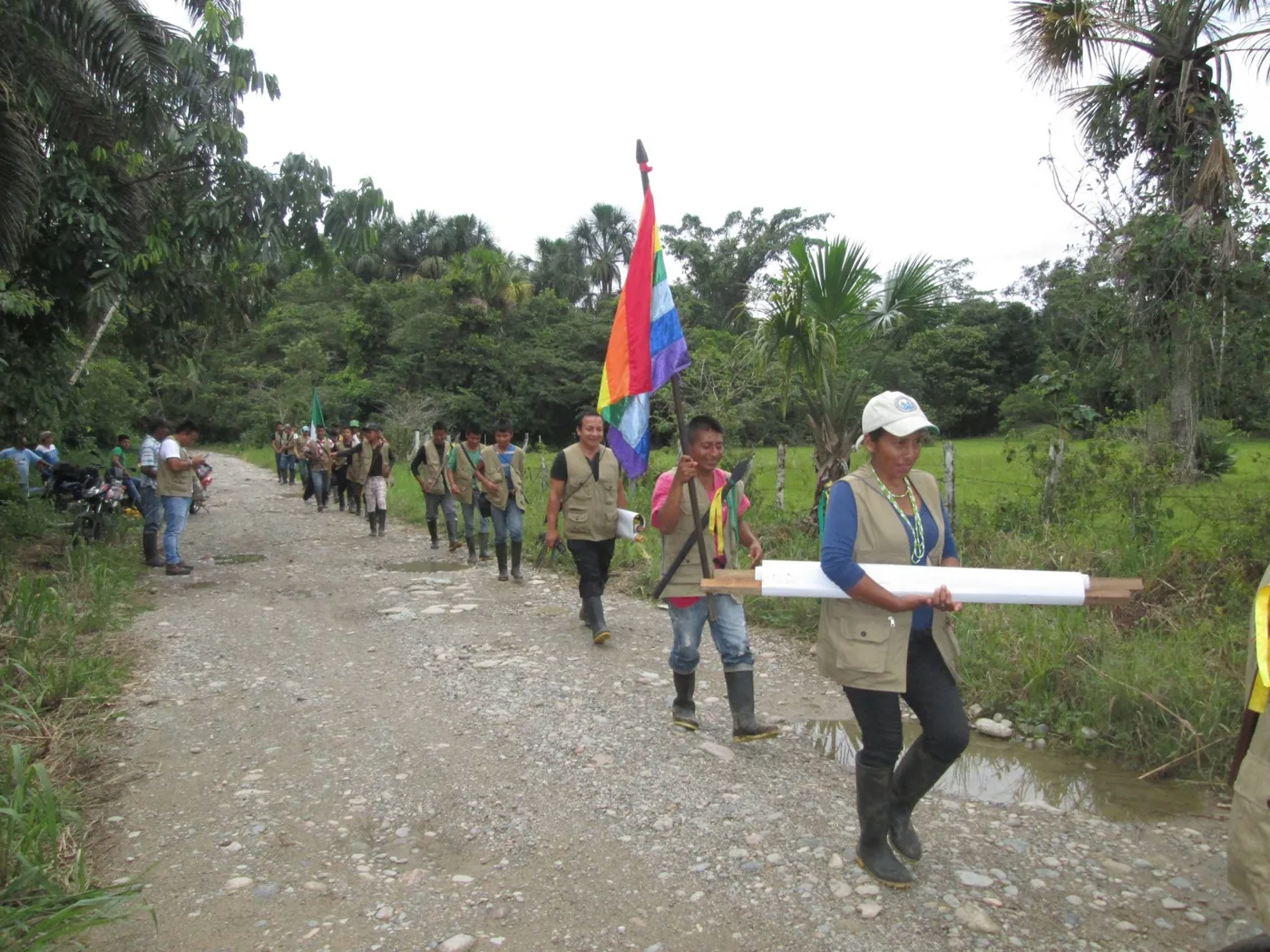
Although the exploration application was made in 2012 and the license was granted to Gran Tierra in 2014, in those two years neither the ministry nor the company documented at any point the existence of the Indigenous Peoples. This despite the fact that three of the affected Resguardos had been legally registered earlier with the defunct Colombian Institute for Rural Development (INCODER): Blasiaku in 2004, San Miguel de la Castellana in 2002 and Wasipungo in 1999. Thus, they moved forward without prior consultation. It can be said that this is where the “ordeal” of this people began.
## “There is bad faith on the part of the institutions”
The Inga People have resisted many attempts at what they call “a new colonization” that supposedly brings development, but not particularly for them, as they denounce. First it was rubber, then coca and now oil.
In response to the actions of the Ministry of the Interior, they began to “resist with mingas and community-level strategies, but making the problem visible was not enough, which is why it was necessary to file legal actions”, said López, referring to the tutela filed in 2015 by the Asociación de Cabildos Indígenas del Municipio de Villagarzón before the Administrative Court of Nariño.
The Inga People developed internal strategies to demonstrate their presence in the area of influence of the APE – La Cabaña project. This process of autonomously generating geographic information had already been documented by Mongabay Latam and El Espectador.
In October 2014 a verification visit had already been carried out —months after the license was granted— in which the Ministry of the Interior and the Prior Consultation Directorate maintained that “no presence of ethnic groups was evidenced”. Following the ruling of July 15, 2015, which was favorable to the Inga, the Court ordered the suspension of the legal effects of the environmental license granted to Gran Tierra until the presence of this community in the project area was verified.
As a result, conversations began with the community to coordinate a new field visit in order to establish whether the people fell within the project's area of influence. Contrary to what one might think, the situation did not turn out favorably for the Inga.
As it had indicated in the past, in 2018, after the second verification visit, the Ministry maintained that there was no presence of communities. However, after repeated requests from the Inga, a third verification protocol was scheduled for late 2020, but the pandemic got in the way. Then came the death of Inga leader Robinson López and the people were left in mourning.
Finally, the postponed visit took place in March 2021. After it, now well into the government of Iván Duque, the Directorate of the National Prior Consultation Authority confirmed, after nine years, the presence of the Inga People, but only of the San Miguel de la Castellana Resguardo, one of the seven that requested verification.
Through resolution 1471 of October 27, 2021, the Directorate stated that “prior consultation is applicable with the plaintiff community San Miguel de la Castellana Indigenous Resguardo, for the project: “APE LA CABAÑA”, located in the jurisdiction of the municipality of Villagarzón (…) as ordered by the Administrative Tribunal of Nariño through the tutela ruling of July 15, 2015”.
That resolution also stated that “prior consultation does not apply with the plaintiff communities: Wasipungo Indigenous Resguardo, Blasiaku Indigenous Resguardo, Nukanchipa Alpa Amukunapa Wasi Indigenous Resguardo (…), Chaluayaco Indigenous Resguardo, Albania Indigenous Resguardo and Saladilloyaco Indigenous Community, (…) for the project: “APE LA CABAÑA”.
One of the complaints of the Resguardos is that part of the La Cabaña platform, covering 629 hectares, has been built on a wetland of spiritual significance for the Inga, thereby affecting the connection of the whole people with their elder spirits.
On the situation of Indigenous Peoples in Putumayo, Laura Rojas, a lawyer with the organization Amazon Frontlines, told this alliance that “there is no response whatsoever from the responsible entities at the local and departmental level. In Putumayo any type of environmental, health and survival harm goes completely unpunished. (…) This is why dynamics of confrontation with the oil companies arise, due to the imposition of an economic model that runs contrary to the communities, the military presence in the territories and the obstruction of ceremonial practices”.
## The water of the Inga is at stake
In the environmental feasibility study submitted by Gran Tierra Energy, it was stated that the project would have direct influence and water intake points in the watersheds of the Putumayo and San Vicente rivers, which cross Villagarzón, as well as in the Sambico stream.
“The San Vicente River, one of the most beautiful places in the territory, flows through and supplies each of the Inga communities of Villagarzón”, the Inga territorial coordinator, Joaquín Jansasoy, told the alliance, adding that for this reason all the Resguardos and Cabildos in the territory are directly affected.
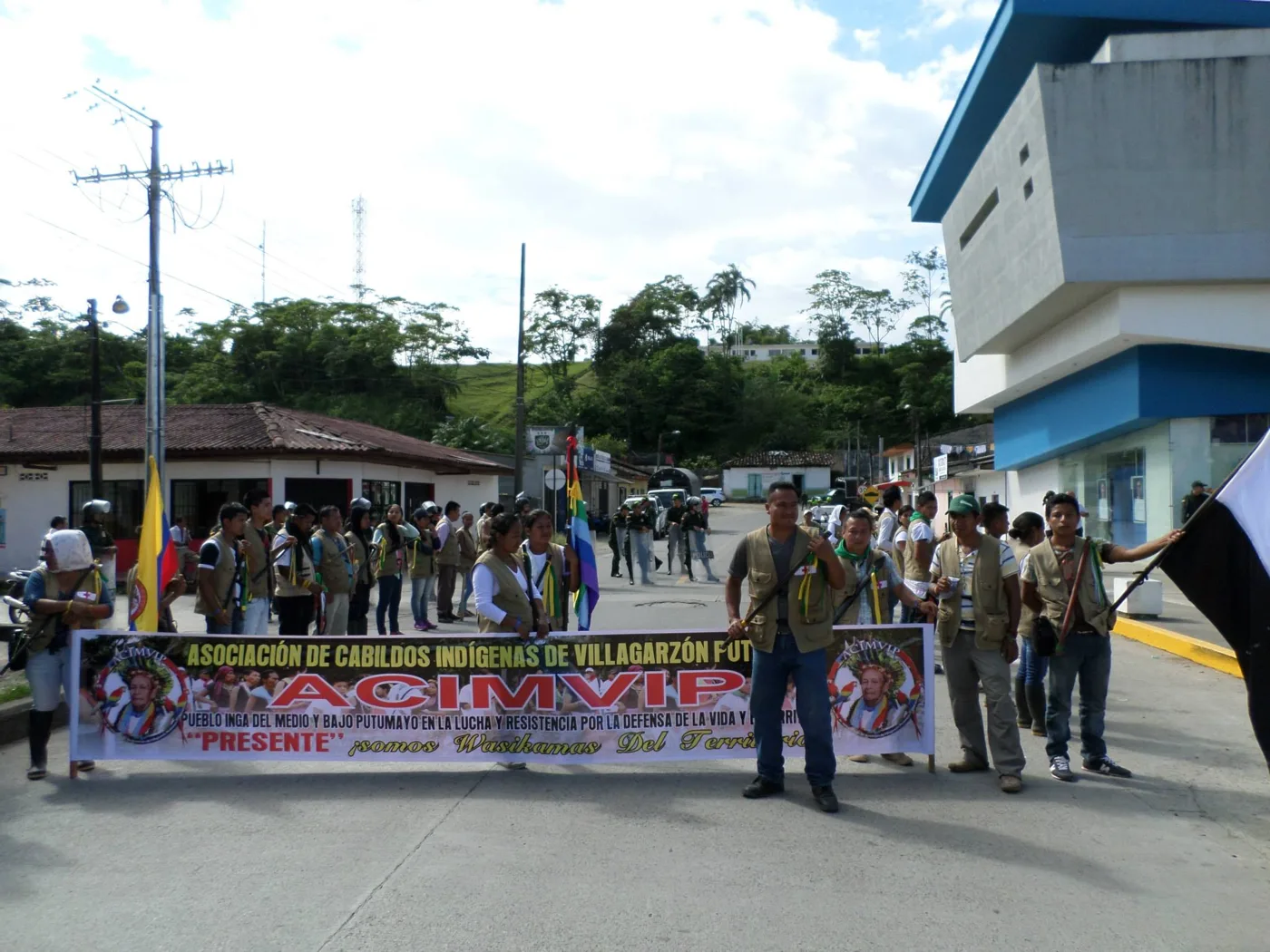
Recall that a 2018 Constitutional Court ruling explains that the direct impact on Indigenous and Afro communities is measured not only by the impact on health or the environment, but also on the social, economic and cultural structure of the group. Luis Jansasoy, coordinator of the Inga Indigenous Guard, elaborated on the social effects brought about by the Ministry of the Interior's decision: “this has caused division and disharmony in the Inga communities. Many have tried to disown their own culture”. The intangible, he repeats, is disappearing.
## A story that repeats itself
In the San José del Guineo local rural zone of Villagarzón, 29 kilometers from Inga territory, is the Piedra Sagrada Resguardo of the Pastos people. They too have been fighting for ten years against the same protagonist: Gran Tierra Energy Colombia.
Camilo Rojas, governor of this Resguardo, told this alliance that the most recent case dates from 2019. “The oil company began implementing the Chontayaco project. Now they call it a ‘development project’ so that in a single prior consultation they can obtain the (licenses for) drilling, maintenance and production, but for each process to be implemented there must be a different consultation”, Rojas said. In short, according to the Pastos leader, each process such as drilling or production required its own consultation process, but the company seeks to obtain the permits expressly by unifying them into a single application.
On March 5 and 6, 2022, a session was held within the prior consultation process on the project with that Resguardo. “The company did not want to reach an agreement after our proposal because it implied a high budget for them. It made us waste our time”, the governor of the Resguardo told Mongabay Latam and Cuestión Pública.
In any case, for Rojas prior consultation is not a guarantee that their rights will be respected. Years earlier, in another exploration area called “Churuco” —located in the PUT-1 block like La Cabaña— ceded by Ecopetrol to Gran Tierra's Colombian subsidiary, the Directorate of Prior Consultation certified the presence of the Piedra Sagrada Resguardo of the Pastos in the project area. But being recognized is no guarantee of participation. Rojas indicated that despite this they have felt excluded from the prior consultation process for that project.
In this regard, Rojas said “we have not seen guarantees in the prior consultation process. The guarantor for us is the Ministry of the Interior, which must ensure that neither the company nor the community is harmed, as the law mandates, but we realize that there is no neutrality or impartiality on its part to guarantee the effectiveness of prior consultation”.
So far the Resguardo has not taken legal action for the violations of its territory, but its closeness to the Inga People has made their struggle an example.
## Threats and intimidation: the price of resisting
The defense of the rights of both peoples has been synonymous with threats against the spokespeople of this cause.
«Pamphlets always come out with the names of some illegal armed groups against what we are doing. In this case, they say we are leftists, that we are guerrillas, that we Indigenous people work with the guerrillas”, said an Indigenous leader who asked that his identity be withheld for fear of reprisals. He also added that some mayors who allegedly seek to protect oil activity appear to be involved in these threats.
A second leader confirmed to us that the groups present in that area are the FARC dissidents of the Southeastern Bloc of the 1st Front, who later joined the Carolina Ramírez Front. Also the Comandos de Frontera, who are in the lower but also in the middle Putumayo. Of this group, he mentioned that they are the ones most often denounced by the communities as perpetrators of the harassment.
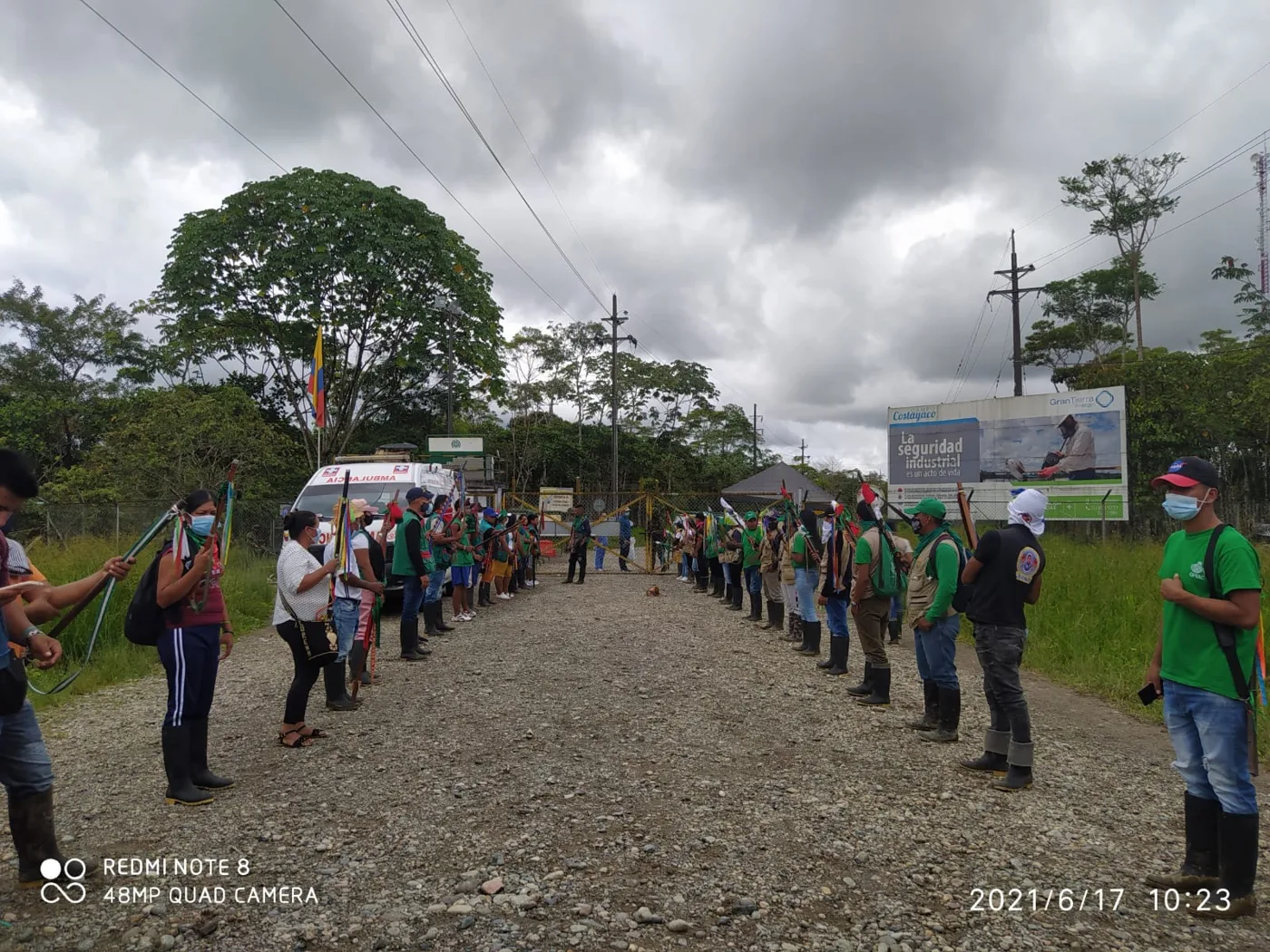
“We have been branded enemies of development and that has made us targets of threats”, said one of the leaders who asked that his identity be withheld. Several spokespeople whose identities are withheld for security reasons agreed on this. No one dares to denounce by name the actors behind the harassment.
Despite this, the communities stated that “we will continue working from the grassroots, the resistance remains standing so as not to be forgotten, so as not to continue being stained by death, coca and hydrocarbons”.
While the Amazon remains in intensive care, the communities will keep standing up for the defense of their rights and fighting for the survival of their peoples. But, according to sources in the territory, in the midst of the presidential elections, oil companies are rushing to obtain as many environmental licenses as possible before the change of Government, regardless of whether along the way they violate the human and spiritual rights of these peoples.
On April 13, 2022, the oil company Gran Tierra Energy answered a questionnaire from this alliance.
Regarding the relationship with the communities near its projects, it stated that “Gran Tierra Energy is a committed partner to the communities surrounding our operations in Putumayo and we focus on leaving a legacy of environmental protection in the regions where we work”.
Regarding the consultation process with the Inga People, it stated that it “is ready to participate in this new Prior Consultation process once it is convened by the Ministry of the Interior”. On the exclusion of six Resguardos by the Ministry of the Interior, Gran Tierra said it recognizes that prior consultation is a fundamental right and an important mechanism to ensure that ethnic and Indigenous groups are adequately informed and consulted. Therefore, they state that they will be willing to carry out and comply with any prior consultation process determined and/or convened by the Ministry of the Interior.
Regarding the situation with the Chontayaco project and the Pastos People, it stated that “it has complied with all the legal requirements requested by the Ministry of the Interior to protect the fundamental rights to prior consultation of this community”. Read the full response here.
This alliance contacted the press offices of the Ministry of the Interior and ANLA about the Inga case, but as of the date of this publication it has not received a response from these entities.

Originally published by Cuestión Pública on April 19, 2022