News · 1 May 2022
Inga People celebrates the oil company's departure from its territory but fears not being consulted on future projects
The Canadian oil company Gran Tierra Energy informed the Colombian State of its decision to end its exploration operations in the territory of the Inga People in Villagarzón, Putumayo.
Although the company will dismantle its facilities in the area, the Inga will continue to demand their rights, in particular from the division of the Colombian State that has recognised the existence of only one community in the area, even though there are nine more.
In 2012 the oil company Gran Tierra Energy applied for a licence to explore the APE La Cabaña project, located in Villagarzón, Putumayo. At the same time, it also asked the State to assess the presence of Indigenous Peoples in the project's area of influence, and the authorities concluded that there were none in the area. With this favourable technical opinion, in 2014 the National Environmental Licensing Authority (ANLA) gave the project the green light. The company thus moved ahead with its operations without difficulty at least until 2015.
But it was precisely in that year that the oil company suffered a setback. In 2015, concerned about the situation, the Inga filed a lawsuit against the National Directorate of Prior Consultation of the Ministry of the Interior, and the Administrative Court of Nariño ruled in their favour. In essence, it ordered that entity to visit the project area to reconsider whether or not there was an Indigenous presence in the area. In the meantime, the exploration licence was left without legal effect and the project could not move forward. Three years later, in 2018, the National Directorate of Prior Consultation returned to the area and again insisted that there were no Indigenous communities in the area. The Inga and their legal team disagreed with the result and asked the court to order a new visit.
In 2021 the court again ordered the National Directorate of Prior Consultation to visit the area, which finally recognized the presence of an Indigenous reservation in the project area. This decision surprised the Inga leadership, considering that in their legal fight they had demanded recognition of the presence of the ten communities of Villagarzón, as they told the Mongabay Latam and Cuestión Pública team in 2022.
What is the new chapter in this conflict that began more than ten years ago? The oil company Gran Tierra Energy announced its withdrawal from the project area. Although the Inga state that they only learned of this news in January through a communication sent by the ANLA, they now know that the decision was taken by the company in May 2022. While this could mark the end of the legal battle waged by the communities, the Inga fear that the government will not respect their right to prior consultation in future projects.
Mongabay Latam spoke with the leader of the Inga of Villagarzón and with one of the advisers to their legal strategy to learn the details of the Canadian oil company's withdrawal, and also to find out what the next steps of the Inga will be in their demand that their territory be respected and that the project close its operations properly.
The withdrawal of Gran Tierra Energy
Gran Tierra Energy is listed on the New York and Toronto stock exchanges. Mongabay Latam reviewed the public documents and statements the company has issued on those markets for its shareholders and found that since approximately May 2020 there has been little mention of block PUT-1, whereas previously such mentions were frequent.
According to a judicial source with close knowledge of the case, the absence of information on APE La Cabaña on the stock exchanges may be related to the company's fatigue with the project. In addition, in 2021 the company had to begin a prior consultation process when the State recognised the presence of the Inga Indigenous Reserve of San Miguel de la Castellana in the area of operation. The judicial source also explained that prior consultation can normally take three years, but since this process only began in 2021 and without including all the communities, the period could extend beyond even ten years, which could make the exploration unprofitable.
What is certain is that this fatigue became evident when the ANLA notified the Inga, in a communication, of the company's decision to dismantle the APE La Cabaña project, located within oil block PUT-1 , as their defence lawyer told us. This information was also confirmed by the Inga leader Carlos López, who told Mongabay Latam that «the company Gran Tierra Energy has expressed its decision to withdraw and dismantle the project called APE La Cabaña, which it has been carrying out in the ancestral territory of the Inga People in Villagarzón, without due consent».
Gran Tierra Energy told Mongabay Latam that its withdrawal from APE La Cabaña is due to its prioritising other projects within block PUT-1. «The decision not to proceed with the APE La Cabaña project at this time is due to a corporate decision to focus our capital and efforts on other areas within block PUT 1 and other blocks in our portfolio», the company said. Regarding the recent absence of information on that block in its stock exchange documents, the oil company added that when they do not report on a subject it is because «that information does not include material updates that must be reported».
The concern of Laura Montaño, legal adviser to the Inga technical team and to the leaders of this People, now centres on the company following the relevant protocol, which requires a State review, before leaving the area. «Now the dismantling process begins. They still have to explain, before the ANLA, how that process will unfold step by step. Gran Tierra Energy must submit a proposal and the ANLA must review it before approving it», explains Montaño, who coordinates the area of finance, economic actors and socio-environmental rights of the civil society organisation Asociación Ambiente y Sociedad.
It is important that oil projects guarantee that they will leave a territory in good condition before departing. Precisely, in Colombia, a bill is being debated to regulate environmental liabilities, that is, the damage left, for example, by extractive projects at the end of their operations. It is estimated that there are more than 1843 environmental liabilities in the country, according to a study commissioned by the Ministry of Environment in 2016.
The figures on hydrocarbon incidents such as oil spills or leaks, including some related to Gran Tierra Energy itself, seem to suggest that it has left a trail that must be taken into account. According to ANLA figures and a data analysis carried out by Mongabay Latam, between 2015 and June 2022 Gran Tierra Energy was linked to at least 26 hydrocarbon incidents throughout Colombia.
The Inga People told Mongabay Latam that the exploration project, which covers more than 629 hectares, has indeed affected their territory and that they expect the situation to be remedied before the company leaves. López stated, in an interview with this outlet, that «Gran Tierra Energy built its platform on a wetland. In a cañanguchal, a site of cultural importance, closely linked to the spiritual strength of the traditional medicine ambi waska. Wildlife also lives and breeds there. They built it without taking into account that, according to the Agustín Codazzi Geographic Institute (IGAC), there may be archaeological remains of the Inga People in that area, which were found during the field visit and form part of the reports of the Public Ministry».
López, who is also president of the Association of Indigenous Cabildos of the Municipality of Villagarzón Putumayo (ACIMVIP), adds that it cannot be overlooked that «contamination was caused in a stream that rises in that wetland and feeds the San Vicente River, which is where the whole community of the Inga People obtains its water. Many families live on the banks of the San Vicente River and use it for their meals or for their water supply». Montaño adds that it must also be considered that «the well has been abandoned. There are mosquitoes; it can be dangerous for children and animals».
In this regard, the Canadian company said that it has not carried out exploration and production activities in the area and that any damage has already been remedied. «Any impact arising from the concrete platform built in 2012 must have been addressed at the time of approval of the Environmental Impact Study provided by the environmental authorities at that time», Gran Tierra Energy told Mongabay Latam.
The defence of the Inga territory continues
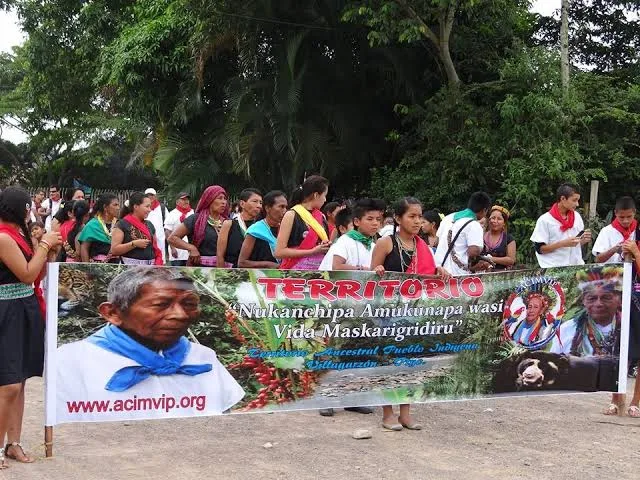
Together with the demand for the remediation of their territory before Gran Tierra Energy leaves the area, the Inga and their legal team are fully focused on the State recognising the other nine communities of this People present in Villagarzón. López told Mongabay Latam that he hopes the Government of Gustavo Petro will finally recognise them.
«They have disregarded the presence of the Inga People. We ask the national government to restore the rights that have been violated. The Directorate of Prior Consultation says that only one community exists. But we are ten communities that have been affected spiritually, physically, culturally and territorially», says Carlos López.
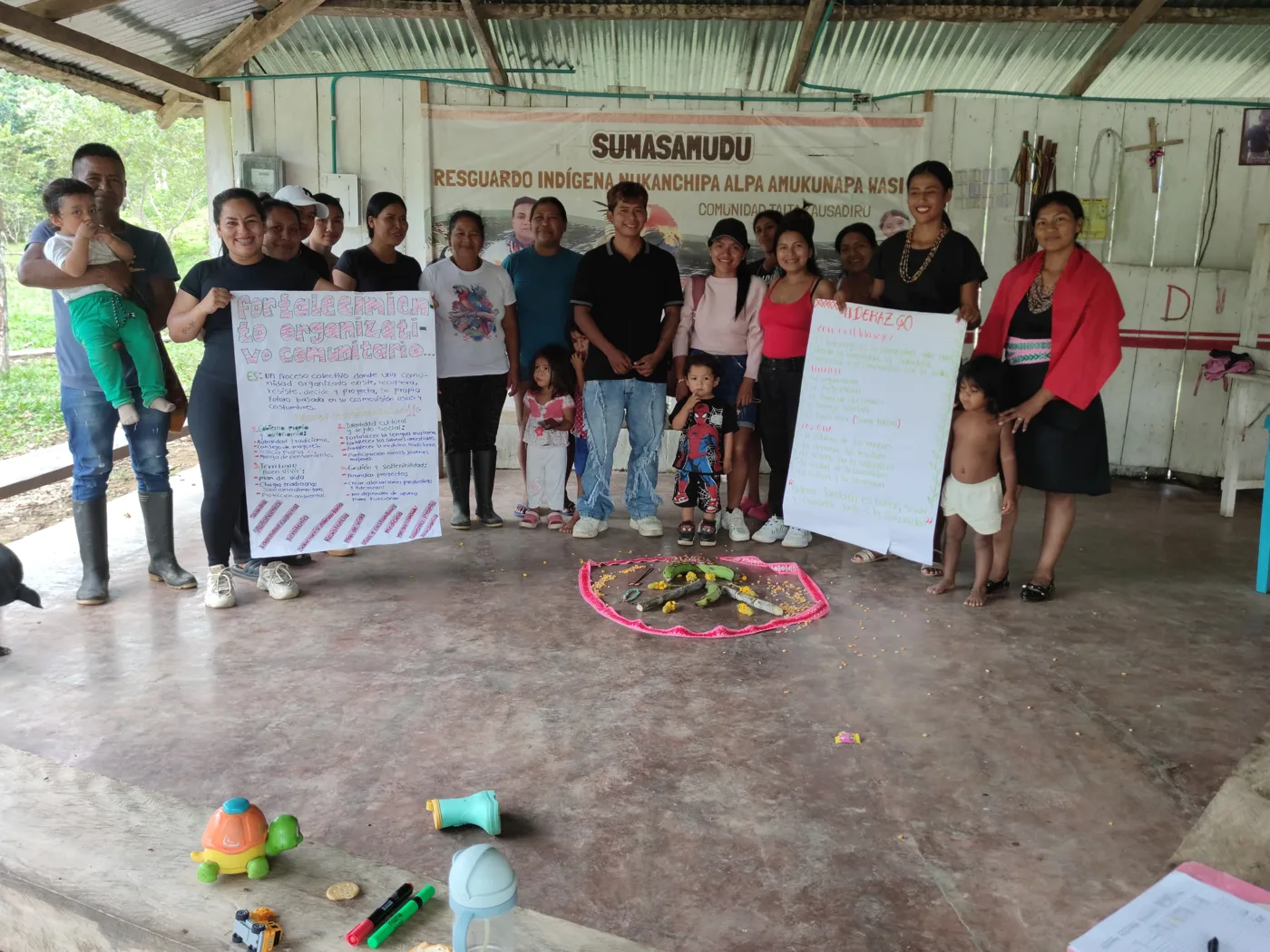
Today the Inga of Villagarzón number 699 families, around 2512 people distributed across the ten communities, figures that they are updating, as López told this outlet.
«We are still fighting. The ongoing problem is the way the recognition of Indigenous Peoples in this territory has been handled by the National Directorate of Prior Consultation, which has violated rights», said Montaño.
According to the Asociación Ambiente y Sociedad lawyer, the problem is that the National Directorate of Prior Consultation applies a limited concept of direct impact by extractive projects. That is, it only considers that one Indigenous Reserve is affected, even though the APE La Cabaña concession area covers the territories of several of the communities and these should be taken into account.
Examples are the Inga Indigenous Reservation of Blasiaku and the Inga Indigenous Reservation of Wasipungo, whose territories are crossed by the oil project, as Mongabay Latam revealed. «In San Miguel de la Castellana they had to acknowledge that there would be an impact because it is 40 meters from the well and it crosses the community. In Wasipungo there is overlap, and in general there are impacts on all the Inga communities of Villagarzón. But the National Directorate of Prior Consultation is not taking an approach that guarantees rights broadly», Montaño said on the matter.
She also criticised Gran Tierra Energy's lack of willingness to recognise the other peoples that the National Directorate of Prior Consultation did not identify in the area. «Gran Tierra Energy should not have limited itself to the initial decision of the National Directorate of Prior Consultation to recognise only one reserve. They could have done more to recognise the other communities. Gran Tierra Energy has seen the presence of the communities in the territory from the beginning, even when the resolutions said there was no presence», Montaño noted. On this point, the oil company Gran Tierra Energy said that it values the mechanism of prior consultation and that the Ministry of the Interior is «the
only authority responsible for certifying the presence of ethnic communities and certifying when prior consultation is mandatory for the execution of a project».
Beyond Gran Tierra Energy's decision to abandon the project, the Inga People consider that oil extraction is not compatible with a territory that forms part of the Colombian Amazon. «The territory is the mother. We defend a harmonious use of the territory. When they intervene in the land (with oil activities), they are attacking the giver of life. That is why we consider that this type of project threatens life, the territory and the Inga People of Villagarzón. This type of project cannot be applied in Amazonian territory», says the Inga leader Carlos López.
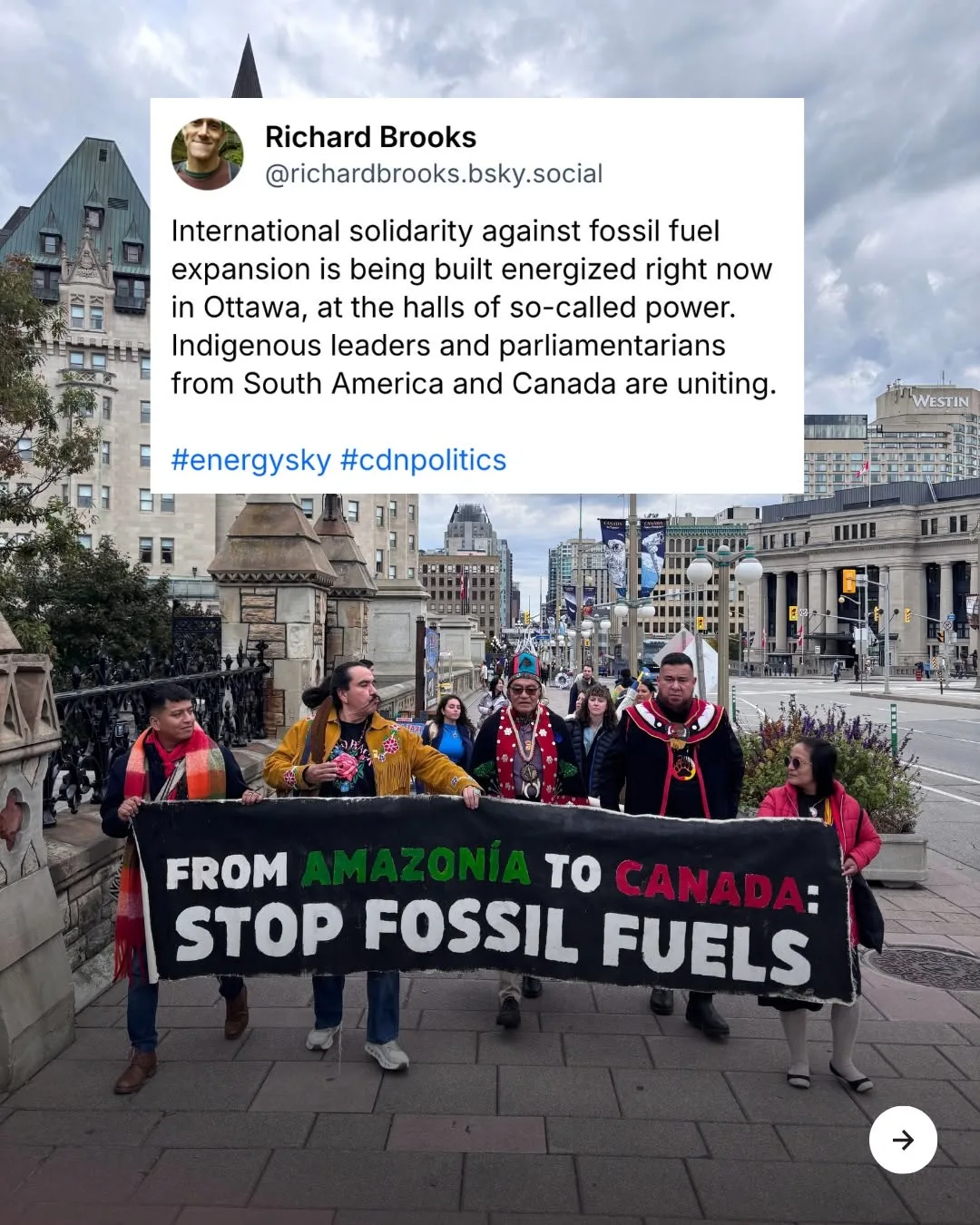
The Inga have pursued their defence in the courts and have also expressed it in the streets through several protests. «We are optimistic about the State of the process under way to vindicate the right to prior consultation. We hope that the principles of the new government can be put into practice», said Carlos López.
Tap a photo to view it in full.
Read the story on Mongabay ↗